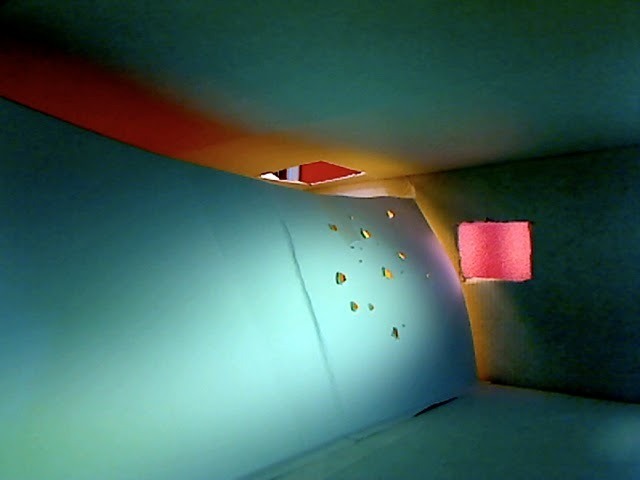
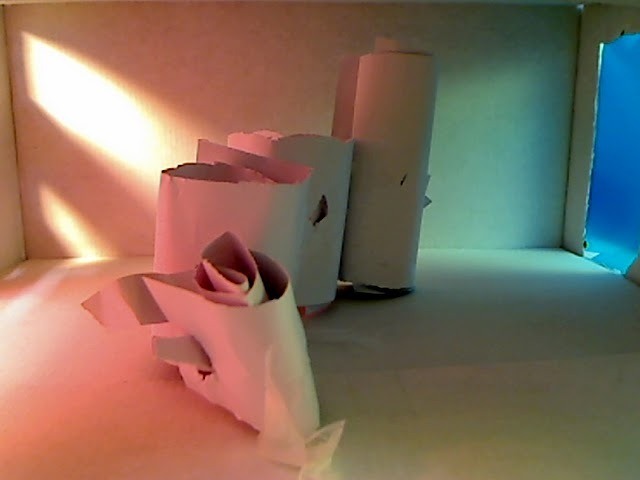
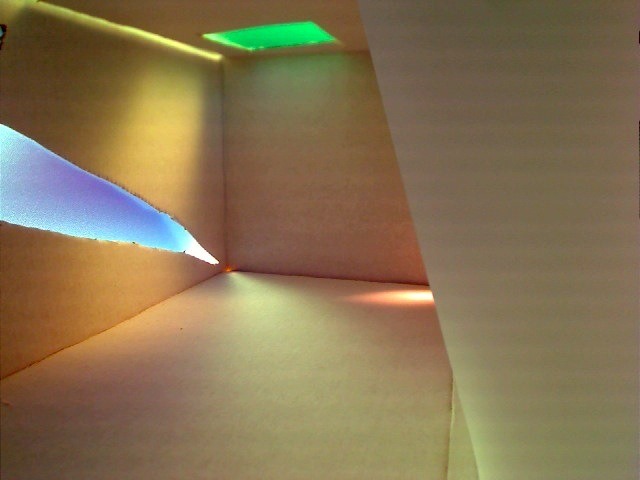
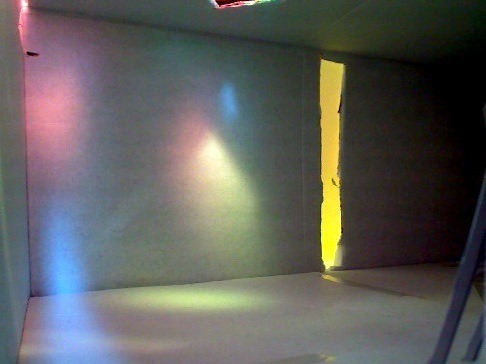
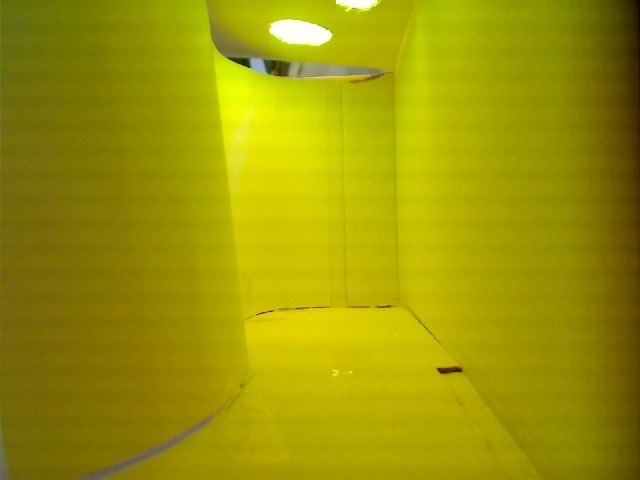
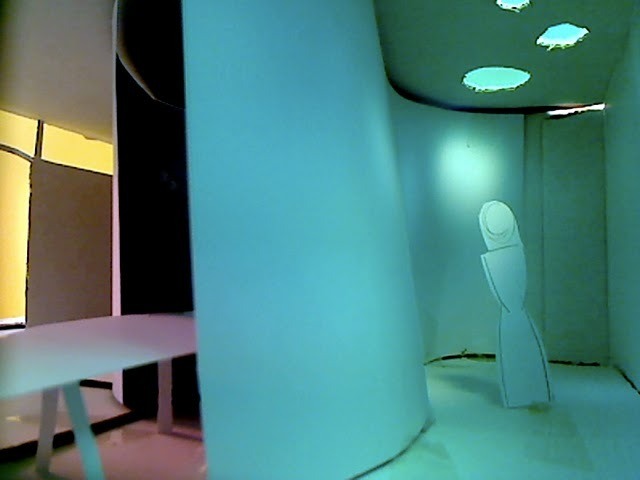
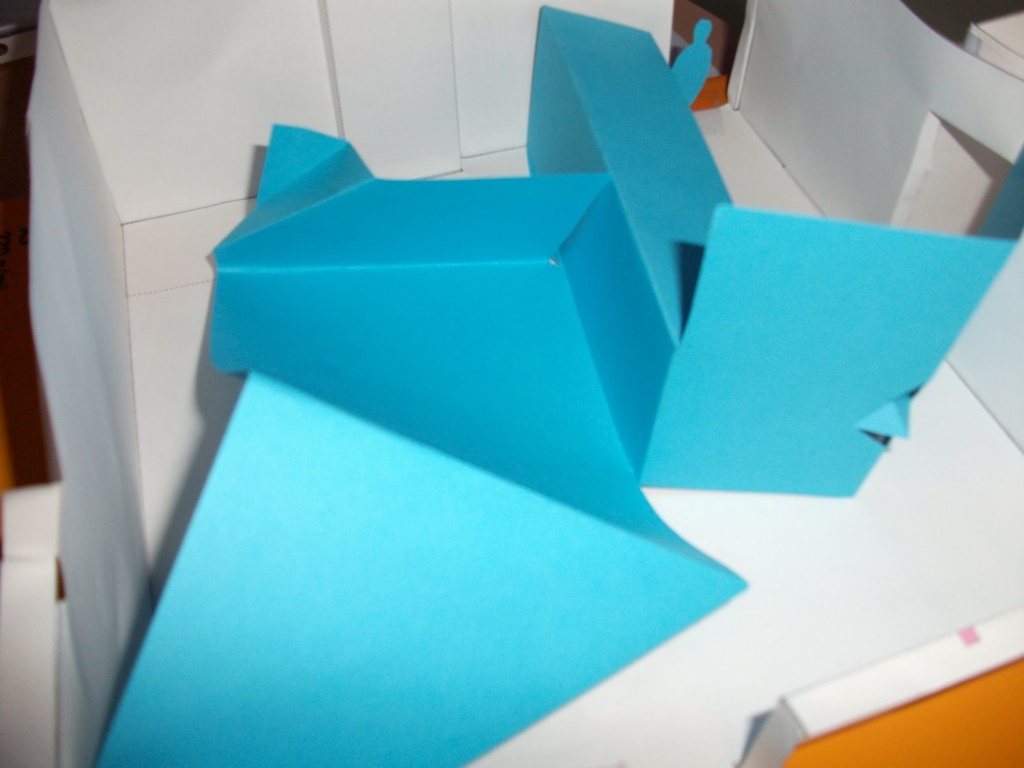
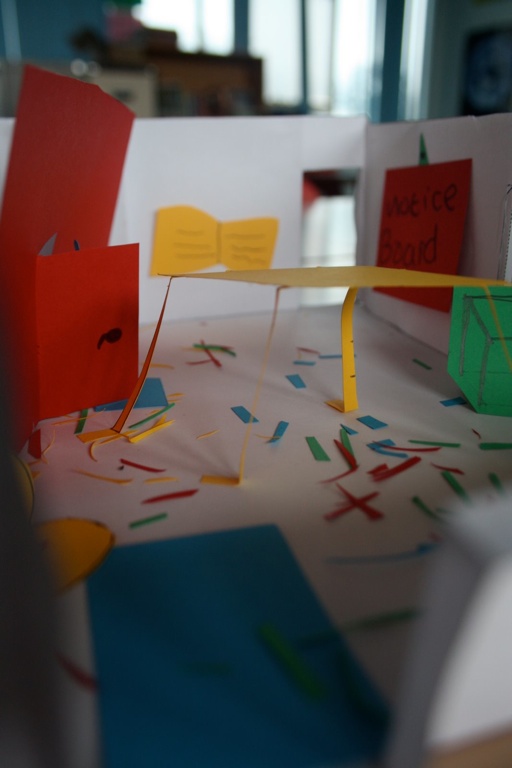
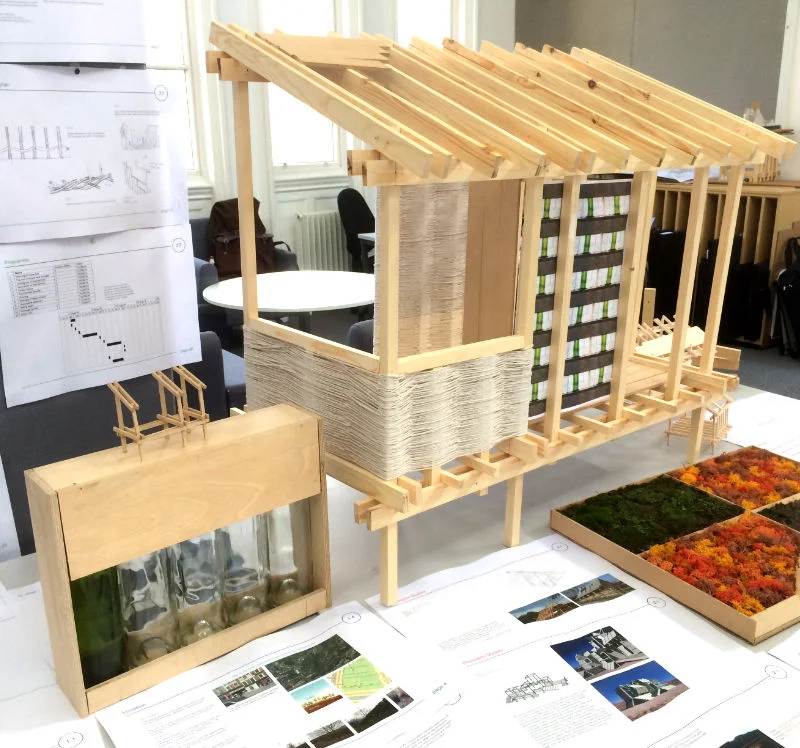
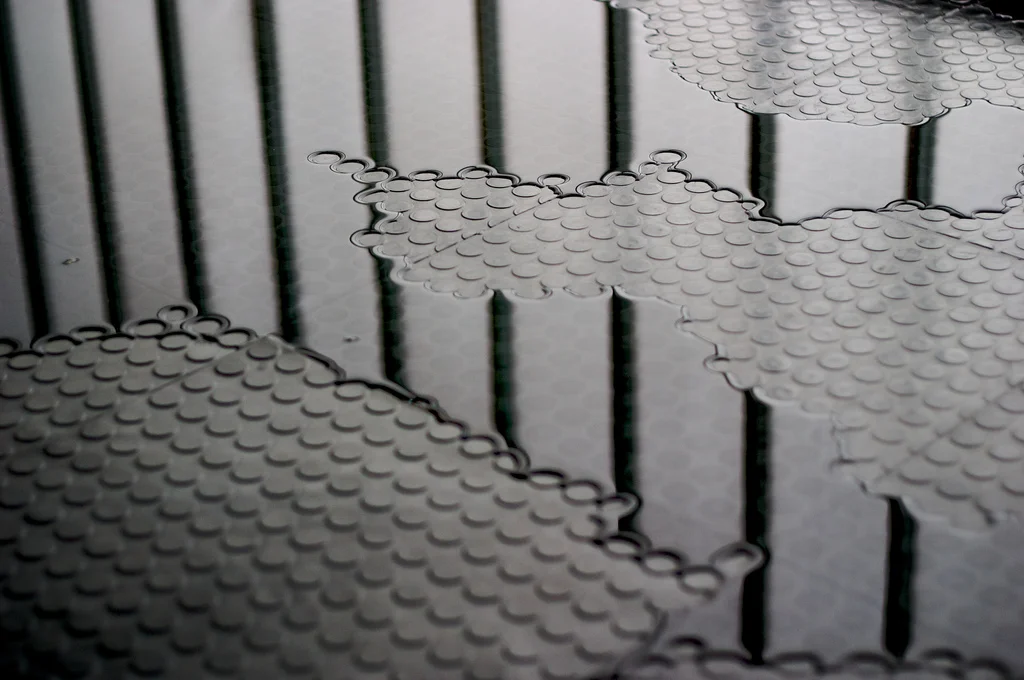
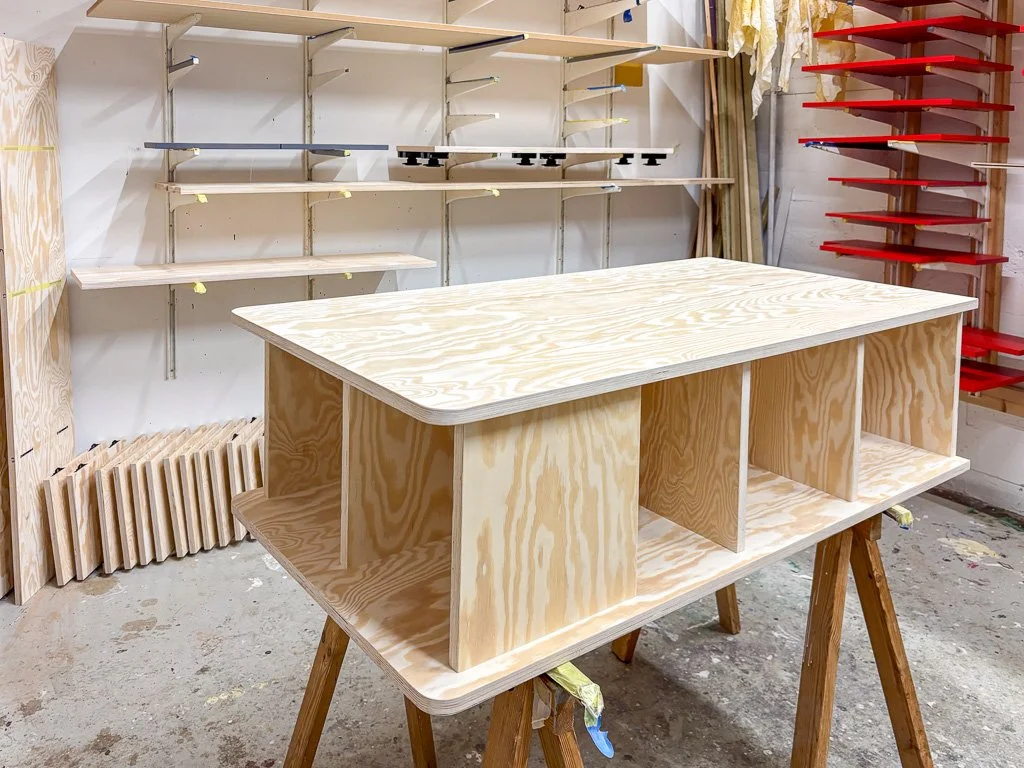
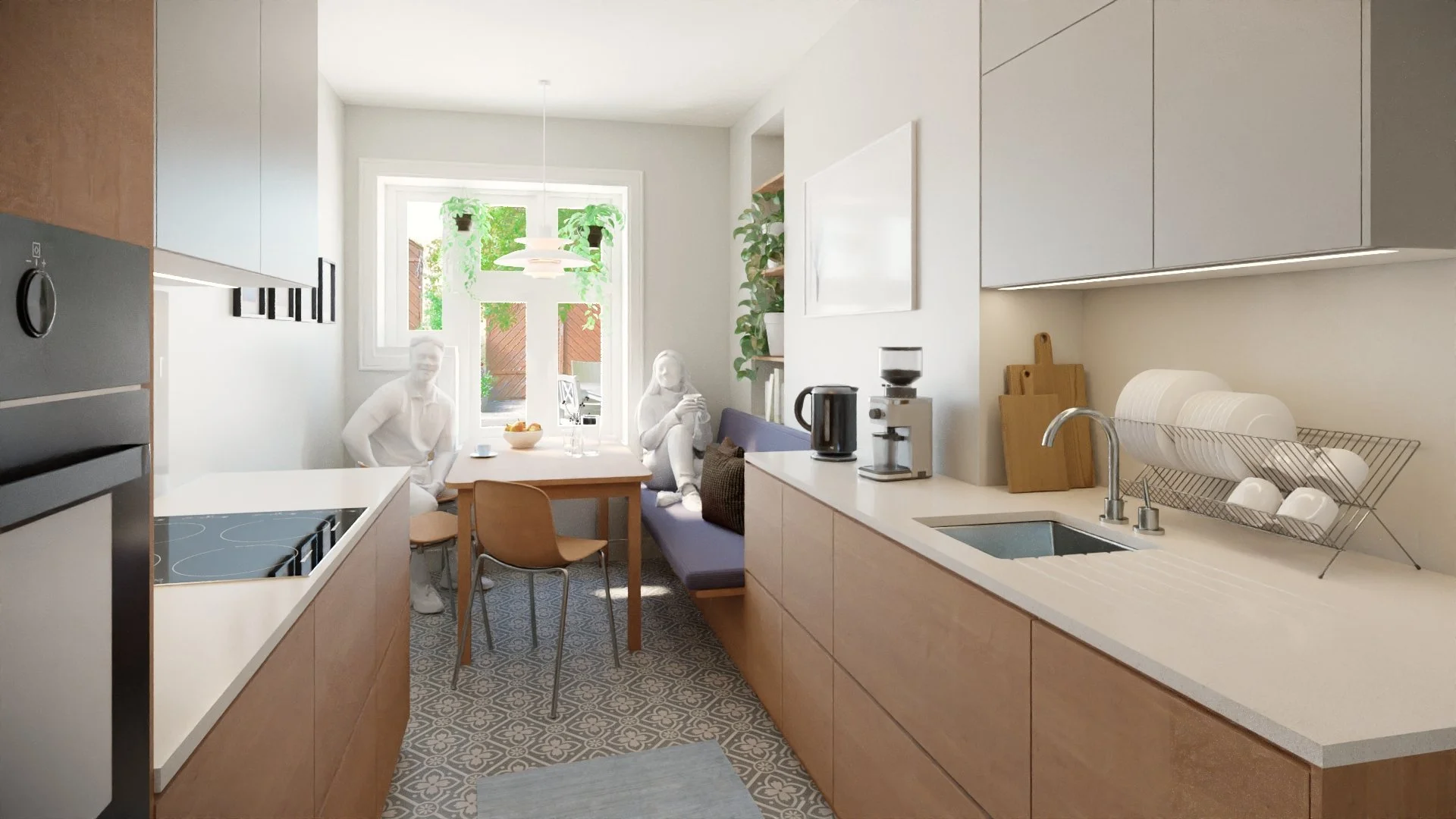
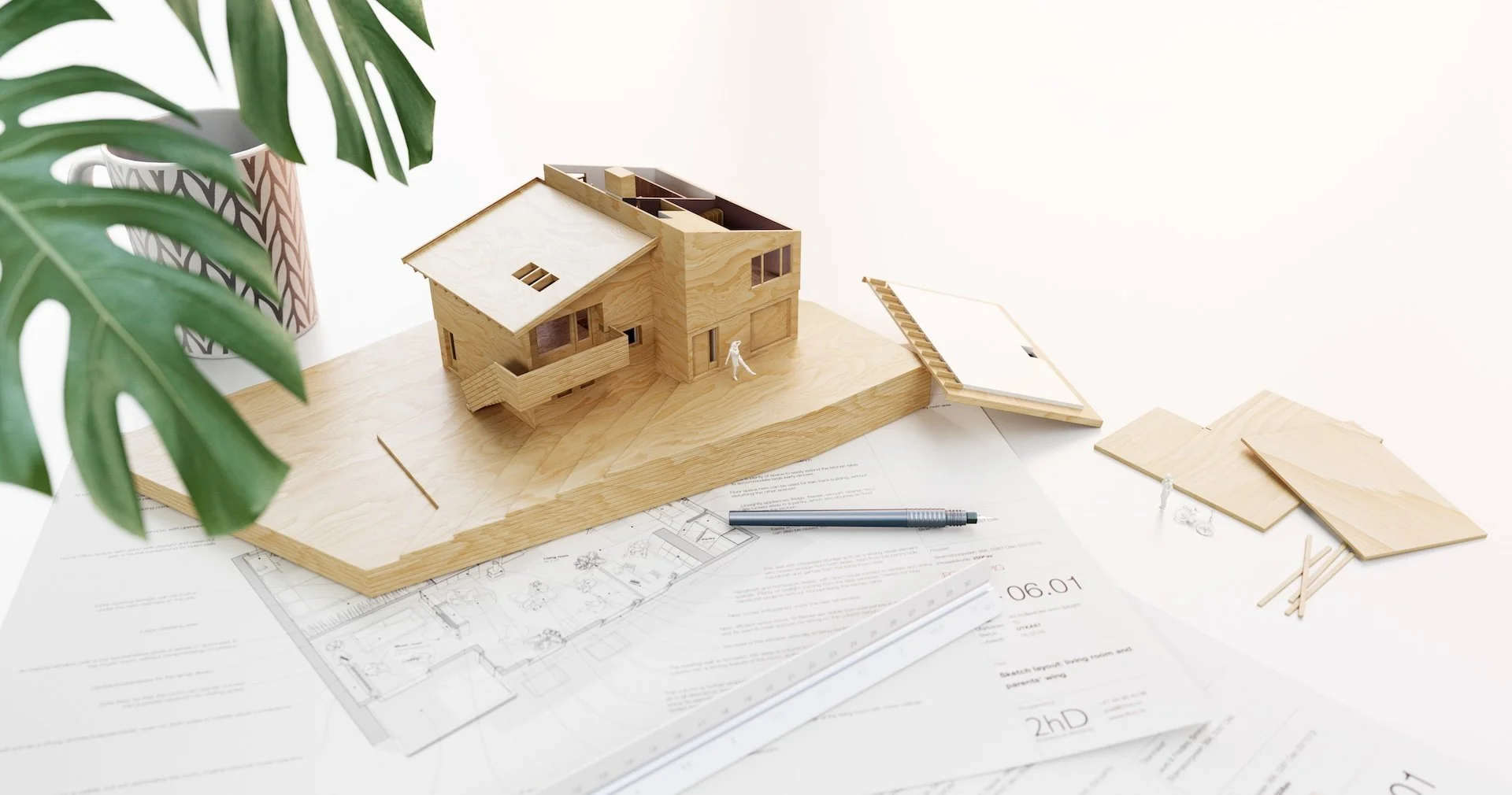
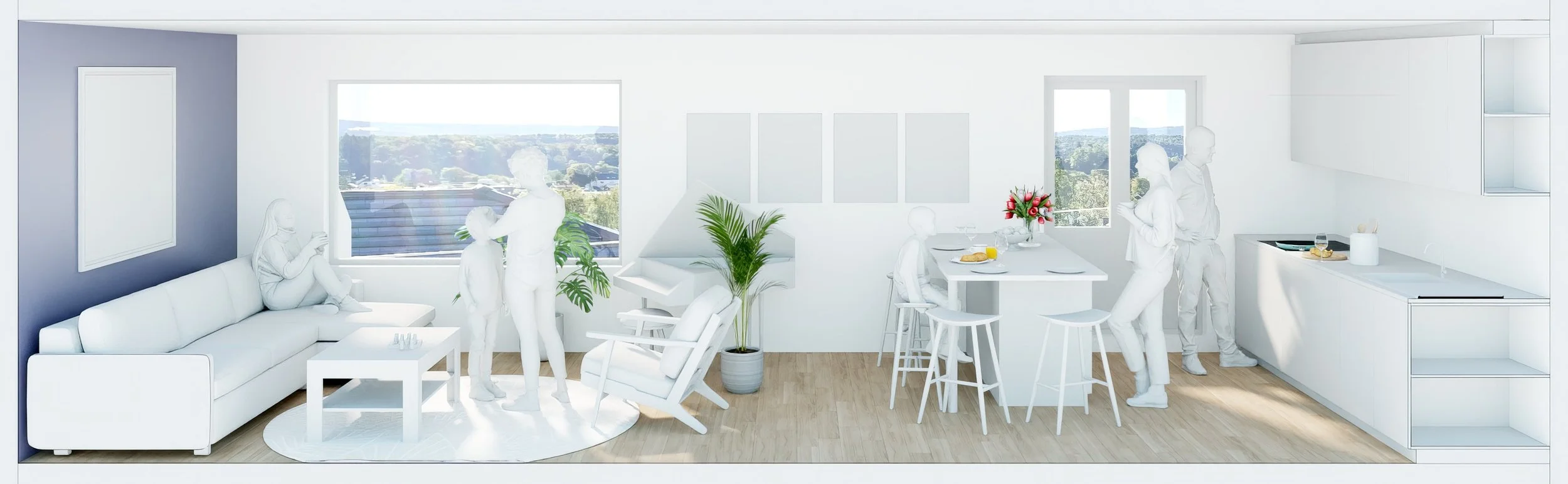
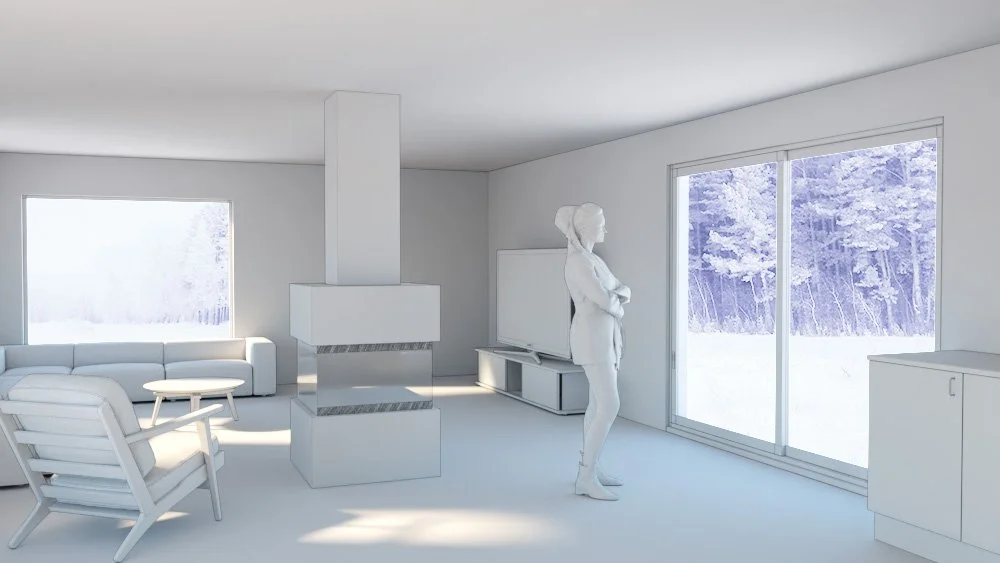
This week at Mannings School it was all about preparing material for an exhibition. Rather than drawing plans, we decided to photograph the lightboxes the students made last week from above. The models were fine as lightboxes, but a bit scrappy for the plan view, so we added some sketchy detail and people.
Light boxes
Continuing our work with Manning School, we brought the school pupils to Nottingham Trent University, where they worked with 2nd year NTU students from the Interior Architecture course. With help and guidance from the students, the school pupils built lightbox models, lit them carefully with coloured light and took these evocative photos.
School net
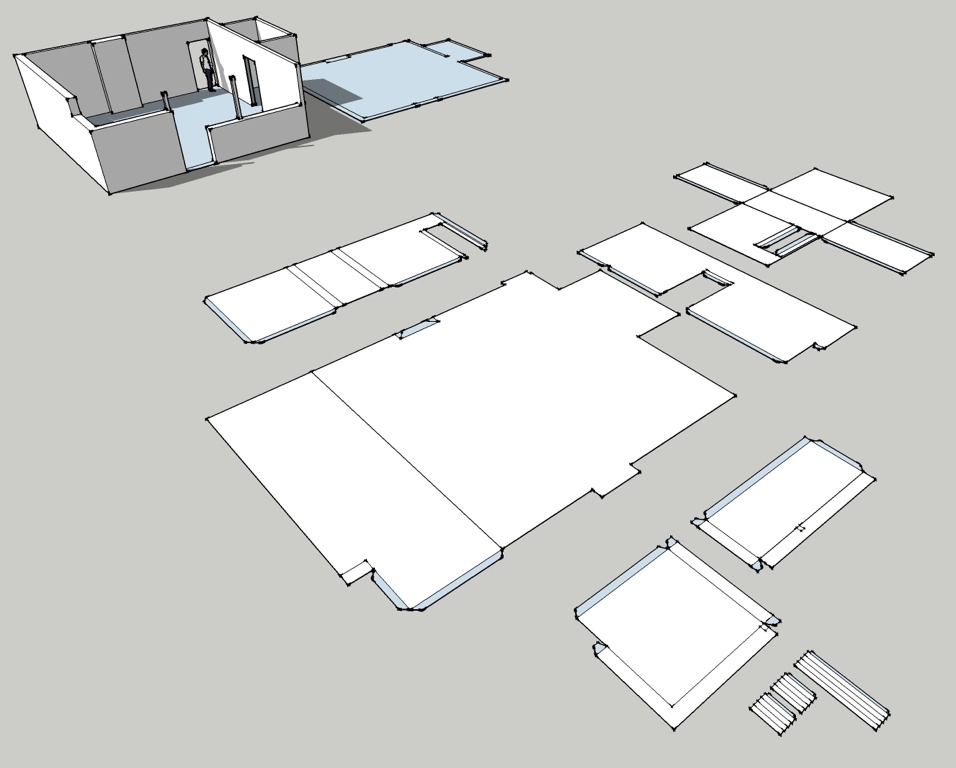
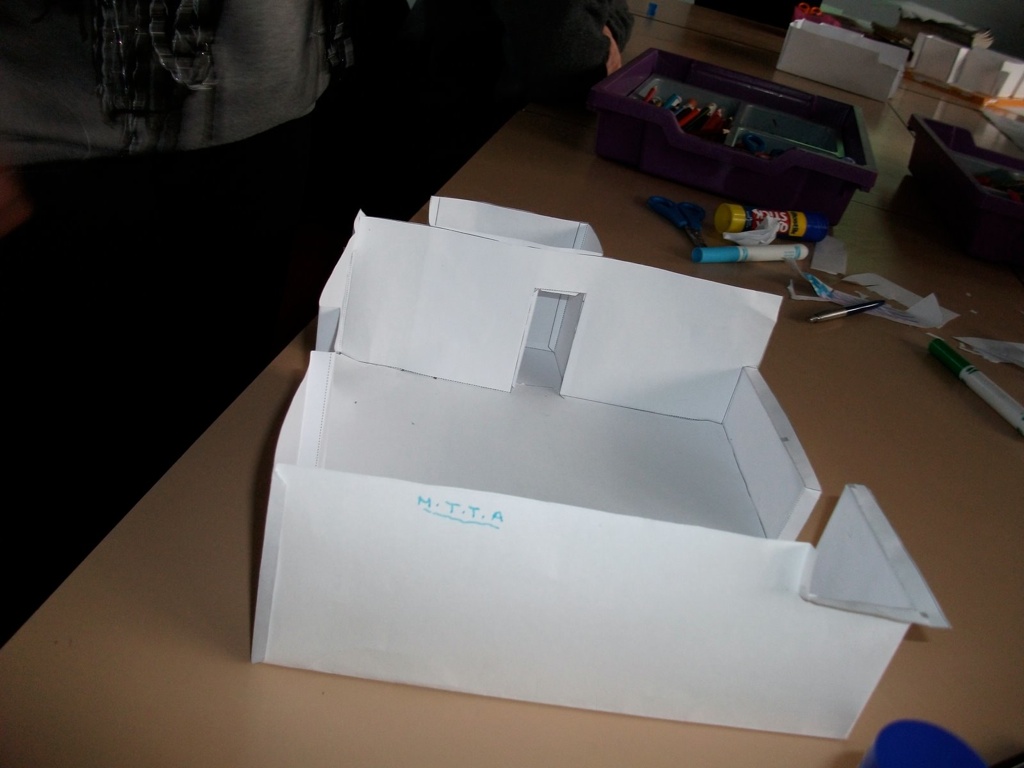
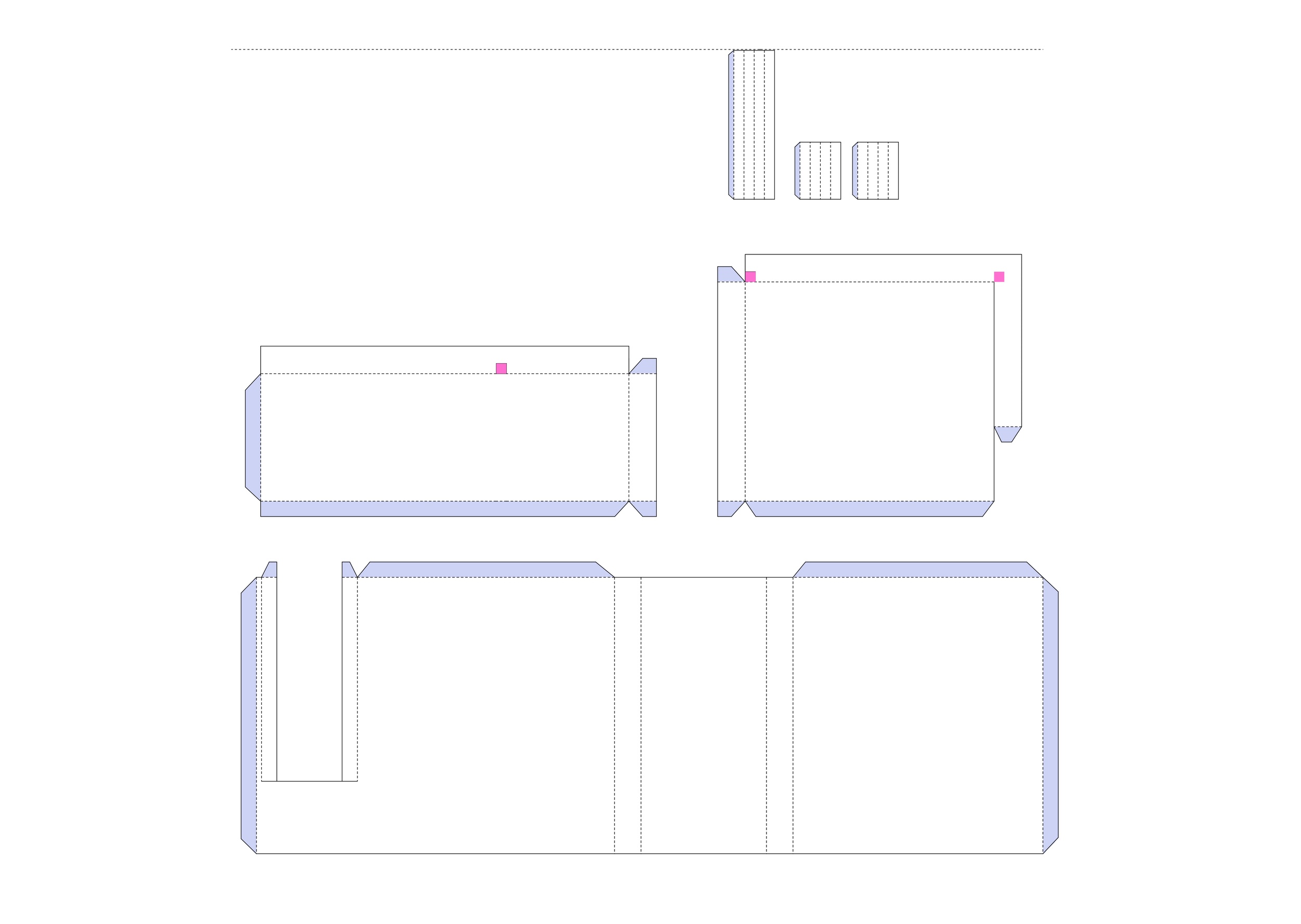
Working with pupils at Mannings School in Nottingham, we surveyed a classroom that will be converted into a creative learning space. A quick Sketchup model was then virtually 'unfolded' to create a printed paper net. In class the students then cut and glued to create sketch physical models, before starting to experiment with transforming the space. Next time we will use thicker card, and investigate laser cutting. Rapid prototyping might be the logical step, but then a whole stage of physical creation of the model, and understanding folding, geometry and nets would be missed, so maybe not.
Ceiling
Dermatophagoides pteronyssinus
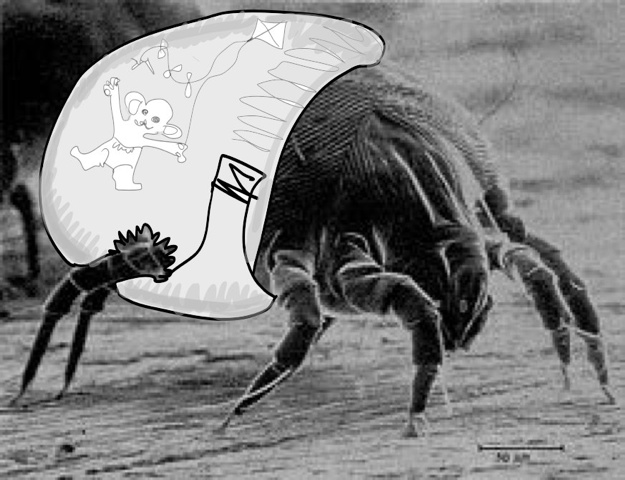
Today it was confirmed that 2hD Technical Director had an allergy to Dermatophagoides pteronyssinus faeces a.k.a. house dust mite poo. Our New Products department moved quickly to develop a solution. All we need now is a teeny robot to assist at change time.
Supergraphics
In collaboration with Chris Matthews (graphic designer, artist, historian...) we proposed some supergraphics for an artists studio and gallery building.
Kimono
A scale paper prototype for a ceremony kimono folded out of a single sheet of fabric (1300x1600mm)
Portfolio project
A painter's studio and home office
After retiring from his career as a journalist, our client needed additional space at home and asked us to design a new art studio that could also be used as an office for his freelance work. Our design was Highly Commended by the Royal Institute of British Architects (RIBA).
The studio provides an ideal environment for focused work while establishing a strong relationship with the garden.
This is the kind of project that is set for architecture students as a way of exploring space, light, and client needs, but few get the chance to actually make such a building later in their careers.
Primarily, the need was for space to focus on his artistic endeavours as a painter, but also to allow for freelance home working. This gave us the chance to design for excellent daylight quality and a quiet, contemplative, single person space.
An interesting aspect of this project was that the client had already chosen a local craftsmen builder, so we were able to collaborate from an early stage to achieve an exciting design with confidence that it could be built. The unusual design of the roof and structure, necessary to achieve the quality of space and light that we wanted, pushed the builder into some unfamiliar territory, but he responded with some excellent craftsmanship and produced a building of which he and the client are very proud.
The studio is carefully placed to complete the layout of the garden and to make best use of natural light and views out. The interior space is dramatic for such a small building, but it also has a cosy and relaxed feel, supporting long periods of focused creative work. The building is very well insulated with a small woodburning stove, used only in the coldest times, to provide all the heating needs.
This project has been Highly Commended at the RIBA East Midlands Awards 2009!

Sketches were an essential communication tool throughout the design process, from the early briefing with our client to the discussion of construction details on site with the builders
Our client was delighted with the thermal comfort and the quality of natural light in his new studio
“As a freelance journalist and amateur painter I wanted a flexible working space set apart from the house, with a district personality that would, nevertheless, not clash with the village setting. 2hD’s proposals fulfilled my checklist and the practice worked intelligently with us and our builder to realise these ambitions.
The studio is a real joy. Being flooded with natural light and with high levels of insulation, it uses little energy. I seldom turn on the lights, even on the gloomiest of days, and the stove is only lit occasionally, as the building keeps a regular temperature throughout the year.”
Compilation
As every year, I prepared a little musical sampling for my friend M.
How to use hoardings
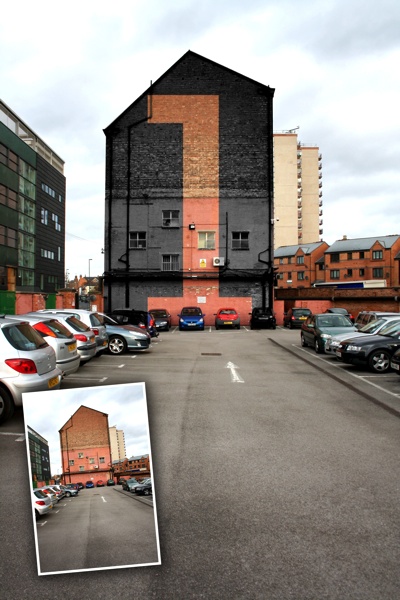
This project involves the demolition of an estate of BISF steel frame houses. The hoarding around the site has been used to capture the community spirit and help a positive transition through the change process.
Sketches at Nottingham Contemporary
Two quick sketches today at Nottingham Contemporary, where we took first year students on sketching trip.
A pencil sketch in the darkness of the projection room, in which I tried to distinguish between shades of darkness around the screen and then capture that.
A doodle using Autodesk's SketchBook app on the iPod Touch, in which I tried to capture the atmosphere of the cafe without worrying over detail. If the sketch looks a little soulless and cold, then I have succeeded.
reduce - REUSE - recycle
Christmas decorations made from a repurposed Simpsons cartoon book.
There is no such thing as wasted heat
A batch of homemade bread proofing on my Mac Mini, while its processor is crunching the numbers of my 3D modeling...
Hub sketches
Some sketches for a short-listed competition entry — The Hub — a collaboration between 2hD, Boden Associates and Shared Architecture.
iHub competition
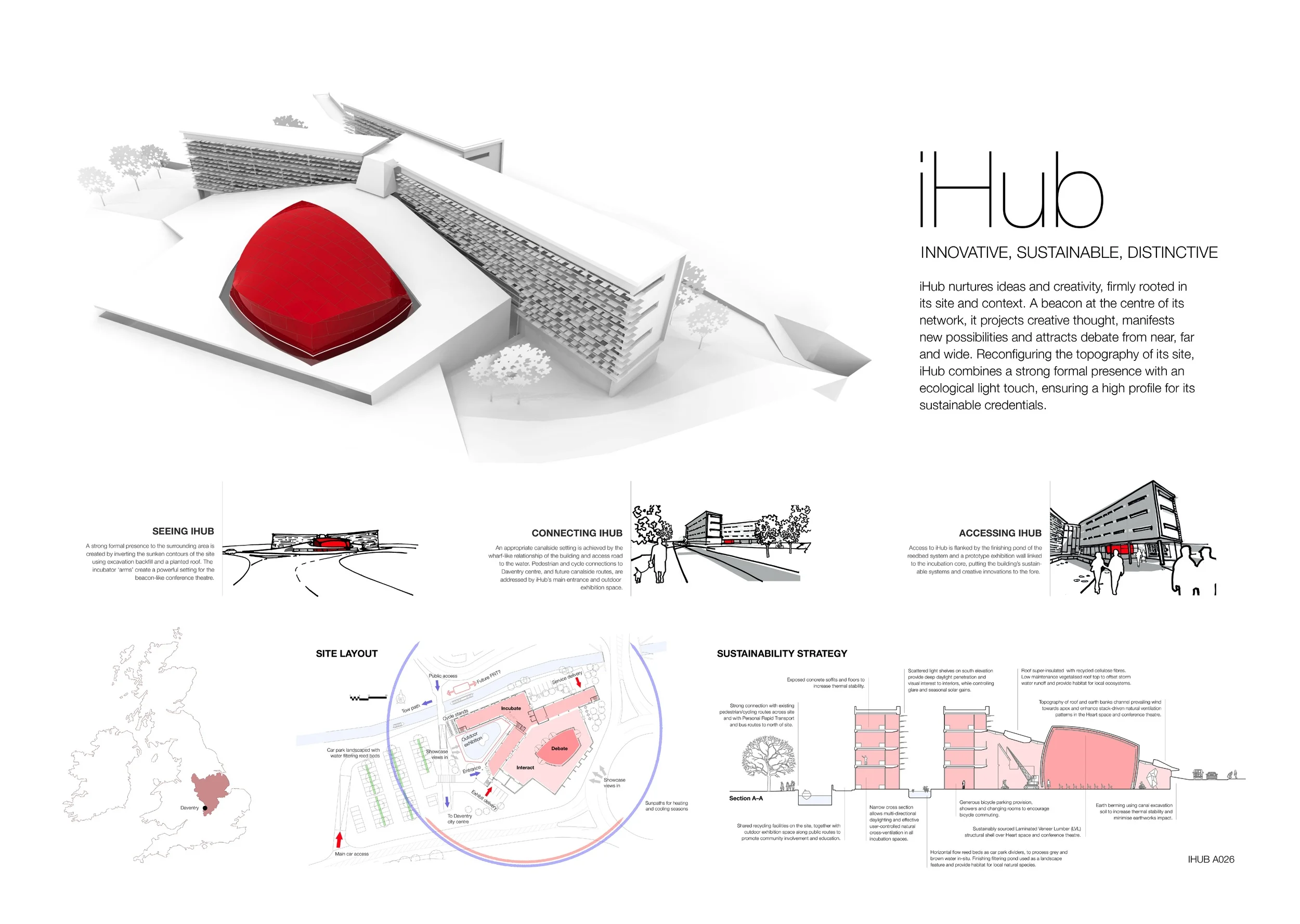
This joint entry project, involving 2hD, Boden Associates and Shared Design, provides a beacon for projecting creative thought through a strong formal and spatial presence, connected with the surrounding canal, road and cycle routes and characterised by a light ecological touch.
The Heart of the iHub: a brightly coloured conference theatre in the social exhibition space
This Building Research Establishment (BRE) competition called for an innovative hub and office building to link centres of excellence in the built environment with entrepreneurial business in order to promote innovative and sustainable technologies. Submitted designs were also encouraged to connect the local town community with the building and its agenda of sustainability and innovation.
The brightly-clad conference theatre pod sits within a highly flexible and dramatically-lit exhibition space, which in turn acts as the activity heart and connective node of the complex. The greened roof above the exhibition hall innovatively reconfigures the site topography providing a new habitat for local ecosystems and driving the natural ventilation inside.
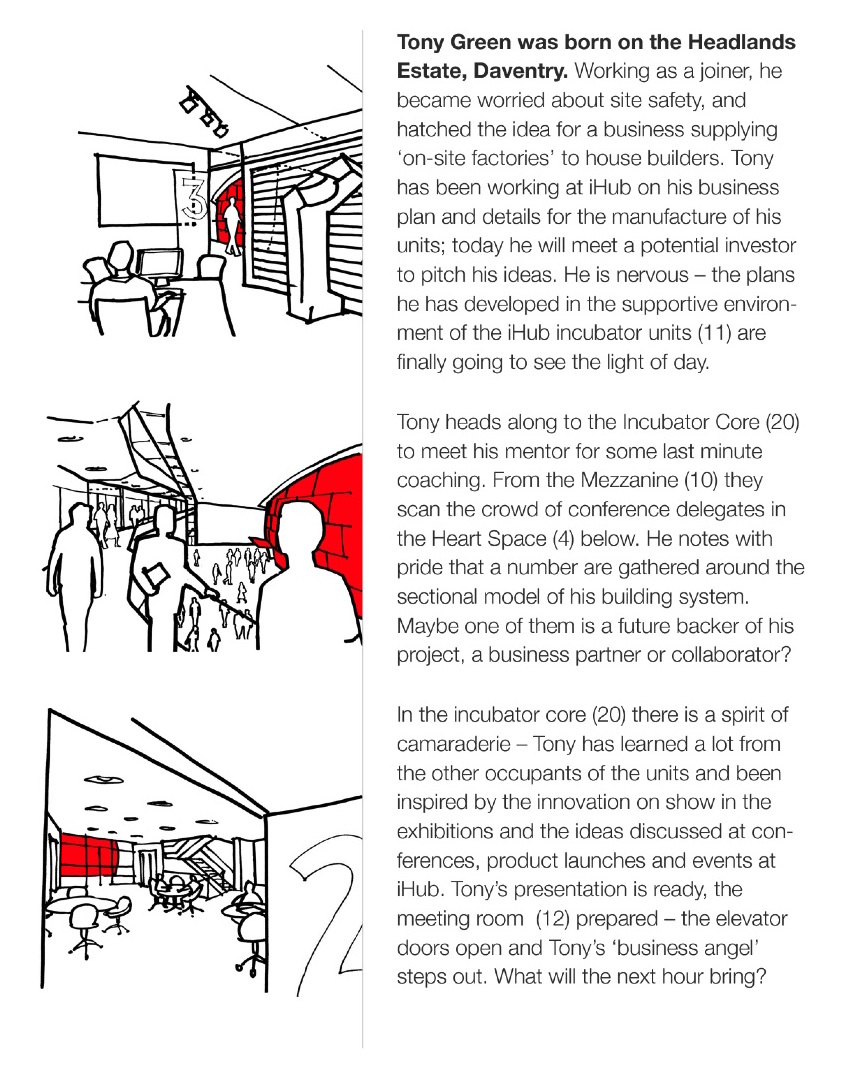
For this competition entry, we extensively used storyboarding techniques to communicate the social dynamics of our proposal. In particular, we presented the way the public would experience the spaces, from the dual perspectives of two fictional characters meeting at iHub: Tony, a resident innovative builder, and Deborah, a potential investor visiting the centre.
Our key achievements in this project:
establishing the right level and pattern of connections with the local town
distilling the client’s main values needing to be addressed in the project
establishing the relational logic of the set of activities to be accommodated
determining a fundamental and innovative sustainability strategy
marrying sustainability aims with an exciting experience of visiting or working in the building
Ceramics workshop
Deconstructed architecture on the island of Nao-Shima, in the Inland Sea of Japan.
Sneinton Trail map
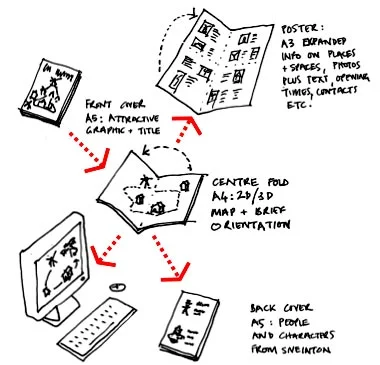
To tell visitors and residents the hidden story of the neighbourhood of Sneinton, a local social enterprise asked us to create a 3D visualisation of the area, where we also live and work. This formed the centrepiece of a printed brochure promoting a tourist trail around Sneinton’s historic attractions.
The final map, carefully crafted to be accessible and engaging, while still representing enough information for orientation and navigation
We have had a long term involvement with Sneinton Alchemy, a local social enterprise dedicated to making Sneinton a better place to live and work. The Sneinton Trail was one of their projects, inviting local people and visitors to discover the jewels hidden in the winding streets surrounding George Green’s famous windmill.
Teaming up with Nottingham Essence, who gathered information about the local history and took care of laying out the brochure, we set about creating an accessible and engaging “treasure map” for our neighbourhood.
We were keen to get across a sense of the landscape and built form, something that is often missing from standard tourist maps. We started by creating a three-dimensional computer model of Sneinton, which served as a basis for the design of the map. Some extra visual survey and on-site sketches brought life and visual clues into the model.
The exercise then became a subtle exploration of alternative presentation techniques and colour schemes to strike a balance between, on one hand, keeping the map as simple and readable as possible and, on the other hand, providing enough details for the visitors to easily orient themselves and navigate along the trail.
The finished brochure was distributed to all residents of the area, inviting them to go and explore their local heritage. You can also get a free copy of the brochure at many of Nottingham’s tourist attractions, and of course at Green’s Mill!
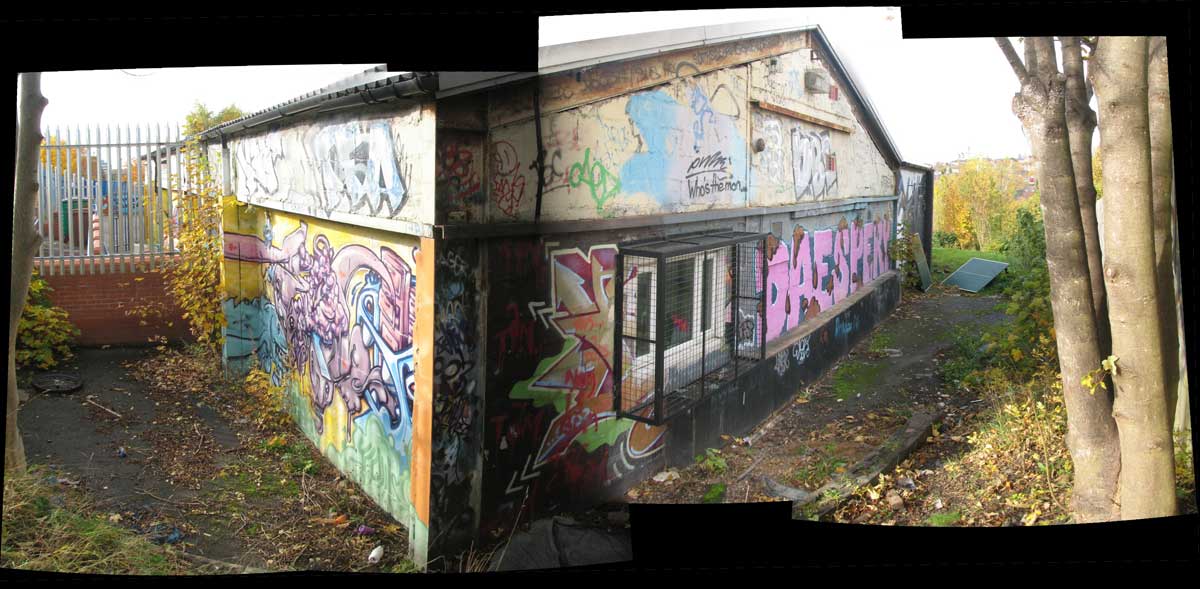
We created a simplified 3D computer model of the urban space by mashing up scaled maps and on-site photography and sketches
We helped Sneinton Alchemy put together a funding bid for the project by visualising the finished product, explaining the strategy and outlining the community benefits.
“I enjoyed working with 2hD on the Sneinton Trail leaflet: they brought a range of professional experience but were always open to incorporating other people’s ideas!”
Leak
Torrential rain leaking into Nikola Tesla airport in Belgrade, Serbia.
Portfolio project
Broadway School
As part of the nationwide programme Building Schools for the Future, 2hD were asked by Lathams Architects to work on the conceptual development of one of the exemplar designs — the renovation and rebuilding of an existing 1960s school to accommodate an additional 300 pupils on a tight inner city site, within a limited £15m budget.
Our consortium later on won the bid for the Building Schools for the Future programme in Birmingham.
We were approached at an early stage of the design process and we focused on:
- carrying out key site studies, including access and climatic factors,
- developing the initial conceptual design,
- replanning the building and site to accommodate a new flexible teaching model,
- designing the interiors in response to the tight technical and financial constraints.
We worked closely with other consultants, including fire and structural engineers, landscape designers and education experts to integrate their input to the core of the design approach.
Our approach:
- redesigning the school to ensure a friendly welcome and easy circulation for staff, pupils and the community.
- Incorporating a deep understanding of the transition in teaching methods to allow this to happen naturally over time.
- creating pleasant learning environments within the pressures of a tight budget and limited space on site.
We initially developed alternative design concepts exploring the subtle relationship between the school and the surrounding communities.
We initially developed alternative design concepts exploring the subtle relationship between the school and the surrounding communities
We sketched extensive and detailed views of the proposed teaching spaces to communicate design ideas to the client and the other members of the team
The evolution of educational methods was to be embedded into the design and we made sure that all teaching spaces were flexible to allow a smooth transition over time
Broadsheet Trees
What do the people of Nottingham think about the built environment around them? How do they interact with it? What role do they have in the future development of the urban space in which they live? How do they imagine this future?
As part of Architecture Week 2007, we teamed up with people from Casciani Evans Wood to create an interactive exhibition — Broadsheet Trees — that would voice the opinions and aspirations of the Nottingham people about their city.
Situated in the neoclassical Arcade Exchange in the heart of Nottingham, just a few steps from the City Council, the exhibition took the form of a series of stylised ‘trees’ on which passer-bys were invited to express themselves using colour-coded leaves that they pinned up on the branches. As the exhibition went on, the trees grew into large colourful objects, creating an intriguing and engaging platform for public expression.
As the exhibition goes on, the trees grow into large colourful objects, creating an intriguing and engaging platform for public expression
With more than 500 entries in a single week, the exhibition was a great success. The Broadsheet magazine later added the voiced opinions to their website, inviting visitors to participate in a public debate about the future of Nottingham’s cityscape.
Designed to be easily manufactured on a tight budget and assembled with simple handtools, we have since helped on many occasions local grassroots organisations to use these trees as a friendly and fun way to engage their communities in public consultations and events.
This project was commissioned by Arts Council England, the Royal Institute of British Architects (RIBA) and the Architecture Centre Network.
The project was run on a very tight budget and timescale, so we made sure that all the elements of the installation could be made quickly by ourselves