Portfolio project
1 Thoresby Street art space

Tom Hughes

Nottingham has a thriving arts scene, and over the last few years there has been a swell of artist-led studios and galleries.

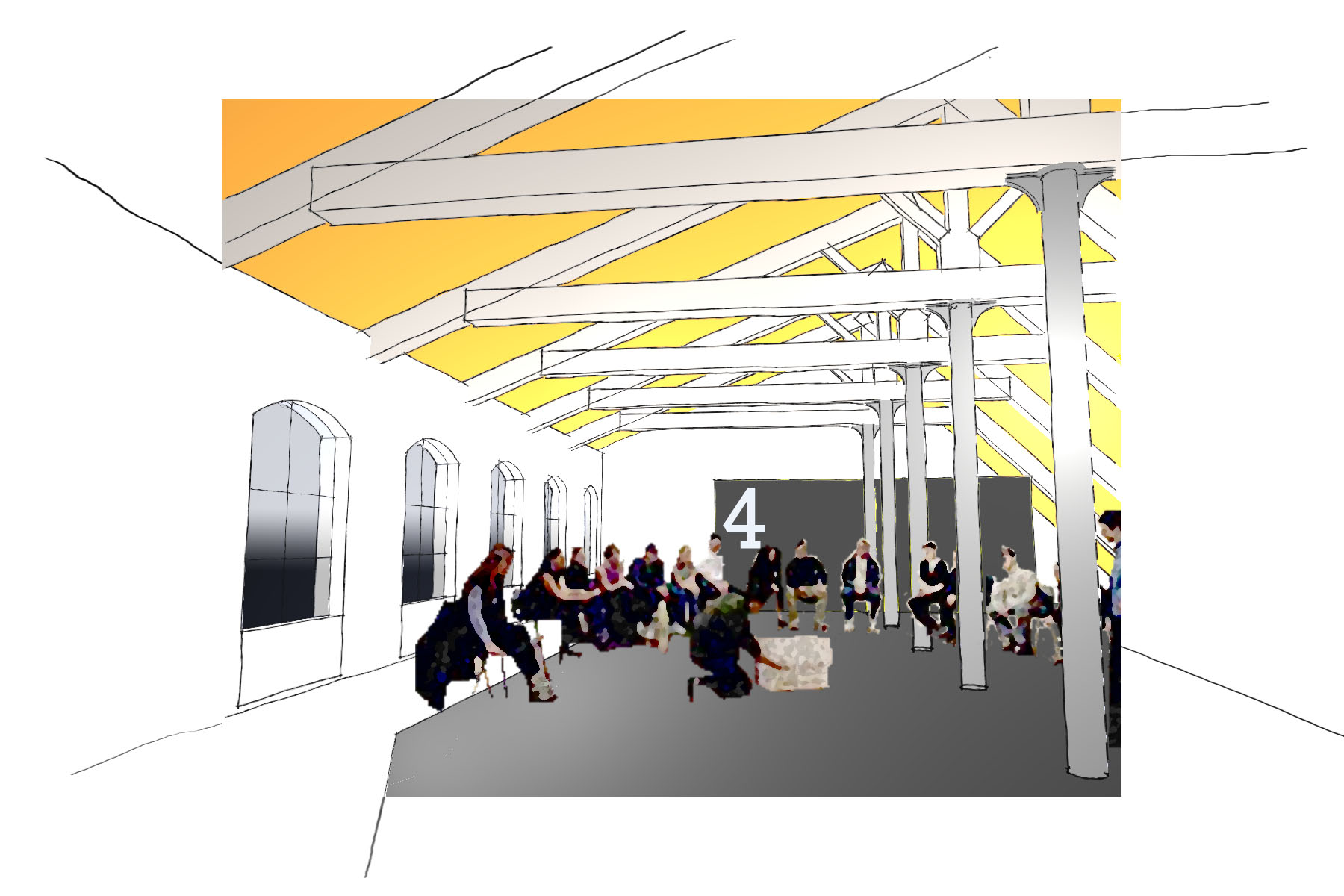
We’ve had a chance to find out more by getting involved with the 1 Thoresby Street building, part of BioCity where the Stand Assembly artist studios, and the influential Moot gallery (which recently disbanded) have been given space. It’s a vibrant place with artist studios and several galleries from the poster-sized Keep Floors and Passages Clear, to the bedroom sized Trade to the 180m2 attic space. It was the Reading Room for the fantastic Hinterland project, a base for experiments in projection from Annexinema and is now the base and a major venue for the upcoming Sideshow — the British Art Show fringe event.
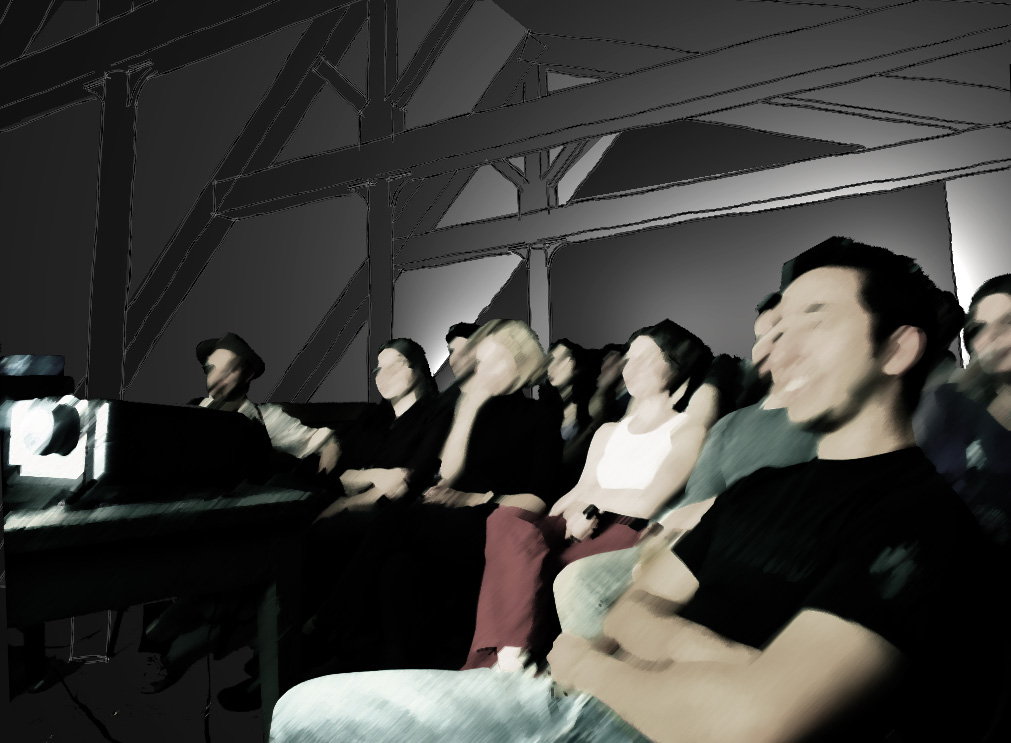
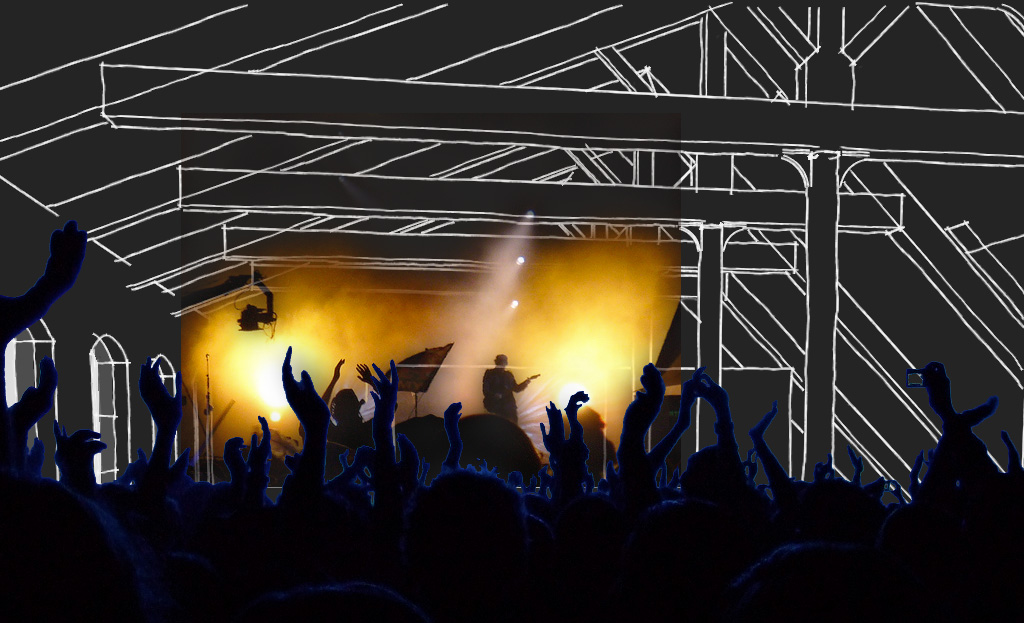
We’ve been helping the artists to get to grips with their building, making something workable, safe and with a strong identity on a minimal budget and, with the future of the building uncertain due to development and road widening plans, probably temporary. It’s a work in progress and an association with the art scene in Nottingham that we hope will continue. For us, it has also spawned a collaboration with artist Tristan Hessing on a piece for the Lincolnshire coast.
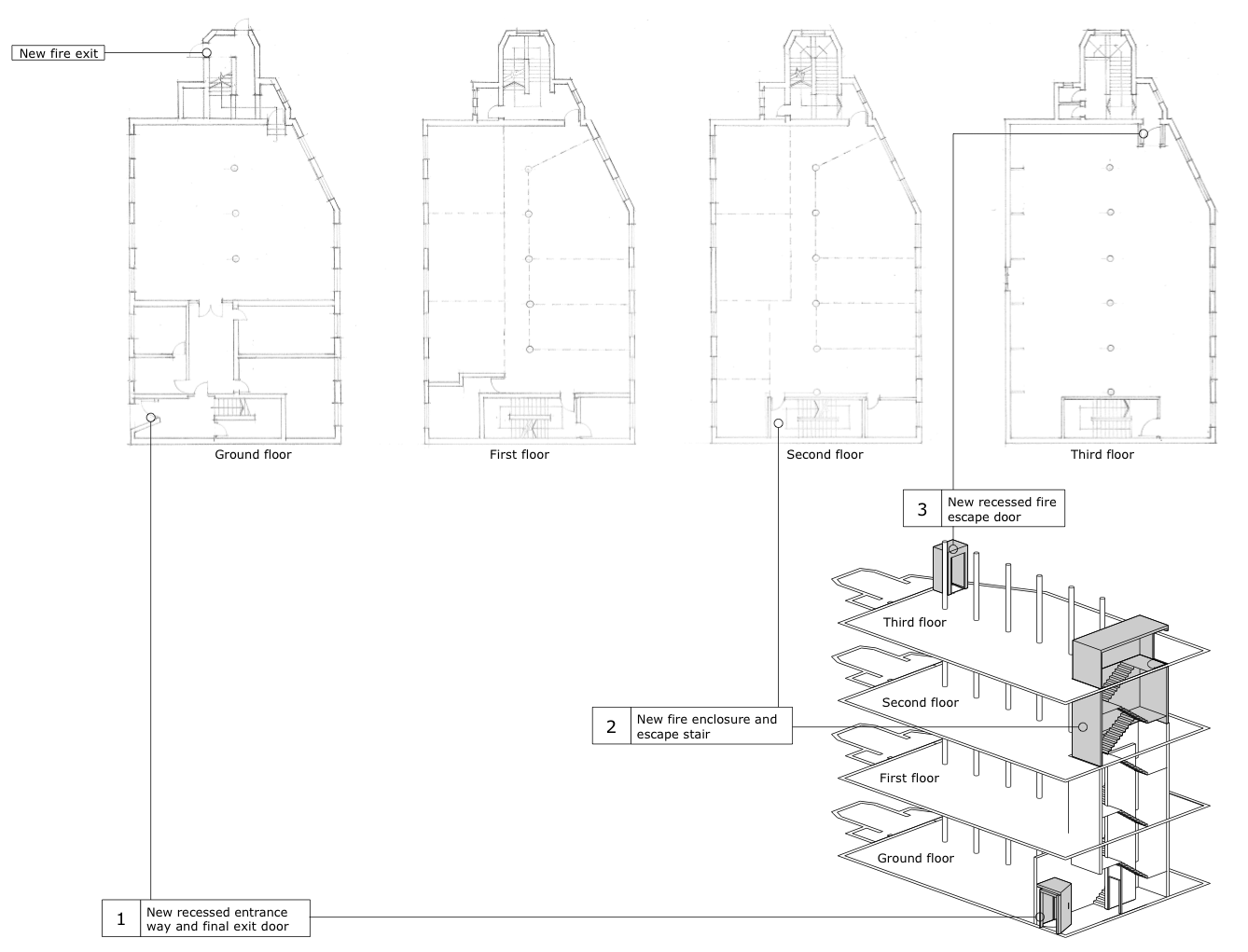
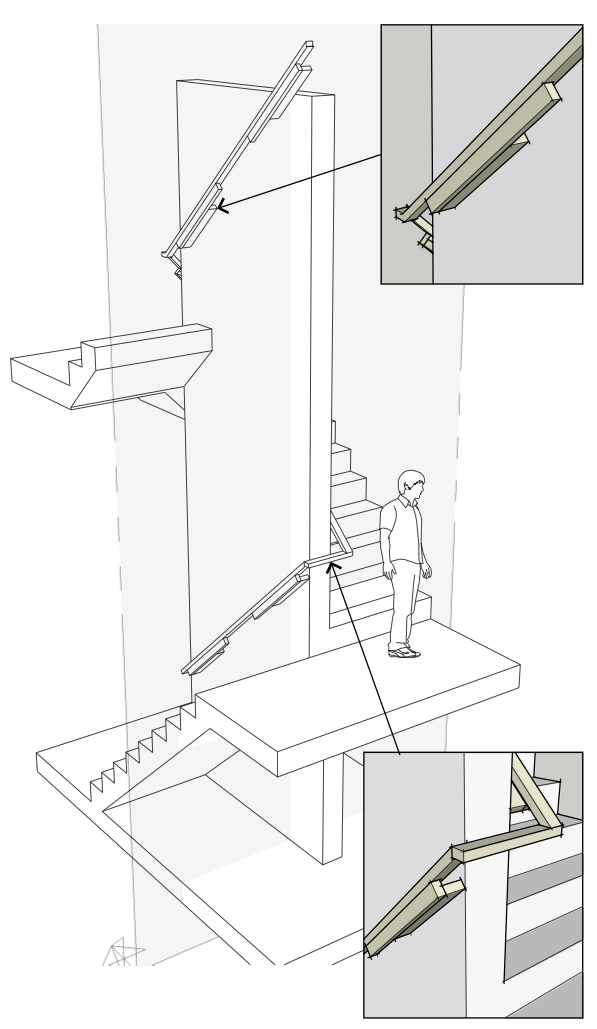
At 1 Thoresby Street an empty, wasted and forlorn building has had new life breathed in to it. We urge you to get down there to catch some Sideshow events, which run from 22 October to 18 December.

Portfolio project
A pavilion for a Museum of Modern Art

Tom Hughes

2hD were commissioned by the Lille Métropole Museum of Modern Art (LaM) to conceive an innovative pavilion to host the ceremonies, celebrating the museum’s re-opening after five years of refurbishment and extension works.

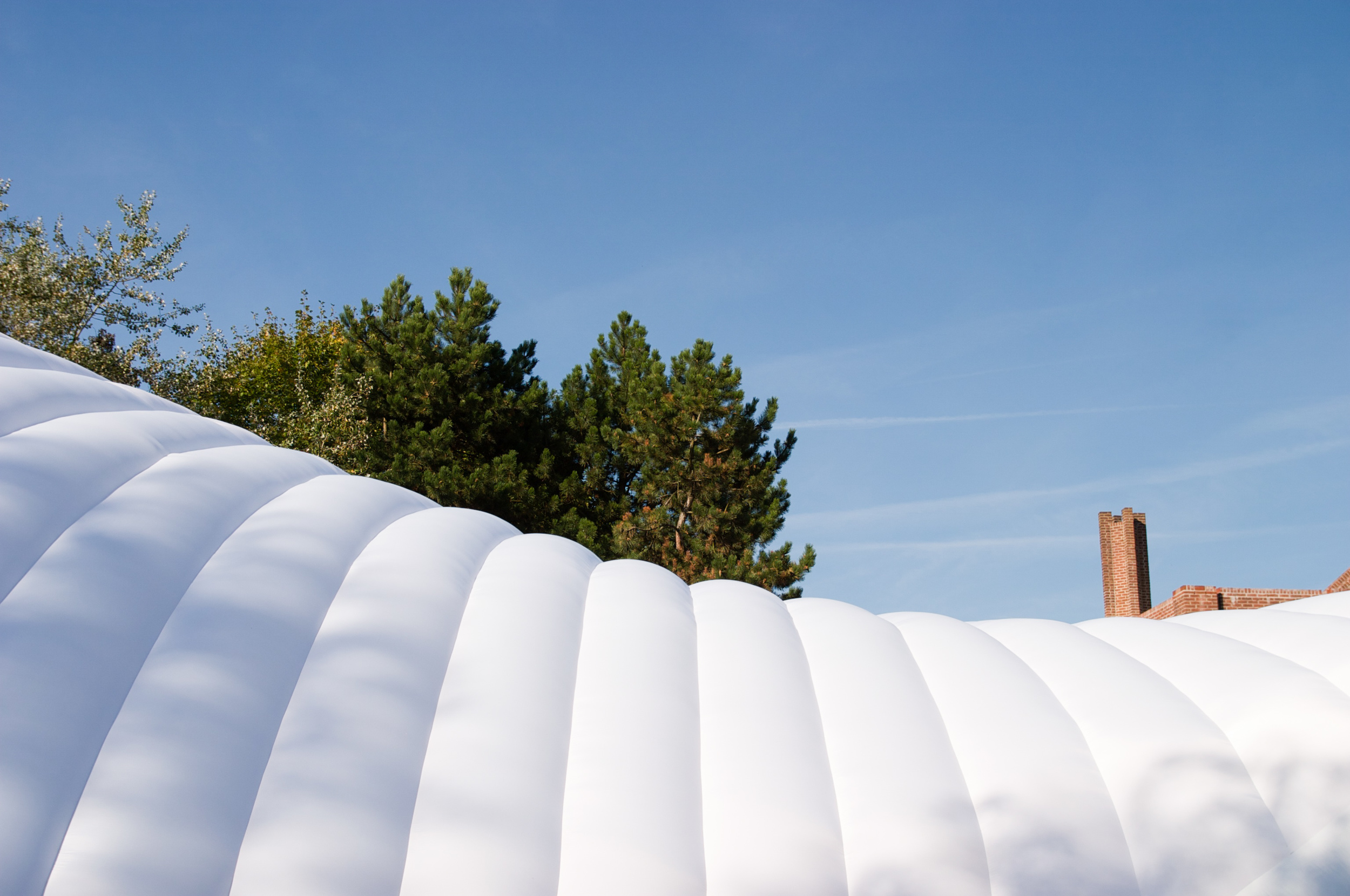
Challenging the existing negative paradigm of event tents, we designed a diaphanous inflatable textile structure to create a mesmerising spatial experience for visitors to the art museum and a striking backdrop for its high-profile public events.

The pavilion at dawn, against the rectilinear backdrop of the museum (Photo: Yves Morfouace)

The pavilion's diaphanous inflatable skin

Our collaboration with LaM started in March 2010, when the museum invited us to submit ideas for an event structure to host up to 350 people for large scale events, ranging from official receptions to dance performances.

Excited by our proposal of a large scale inflatable structure but unsure about its feasibility, the museum initially commissioned us to produce a comprehensive study covering all relevant aspects of feasibility, including the erection process, structural modularity, internal micro-climate, functional analysis, budget simulations and health & safety.

We then teamed up with Inflate, experienced makers of successful inflatable event structures, to produce a custom-designed pavilion that was versatile enough to host the wide spectrum of events envisaged by the museum and that fitted within the tight budget of this not-for-profit art organisation.

Complementing the orthogonal lines and hard materials of the existing buildings and the urban park surrounding them, the lightweight translucent envelope and organic lines define a transient space between the park’s outdoors and the museum itself, welcoming and orienting visitors in their exploration of the extensive art collections. The pavilion also acknowledges and creates a playful dialogue with the many large-scale modern sculptures inhabiting the museum grounds.

The pavilion is designed to adapt to a wide range of future uses, from public reception to theatre performance.

The structure was first installed in September 2010 to host thousands of visitors for the week long opening festivities. Beyond this, the pavilion will also provide a flexible and iconic new space to host the wide variety of future events to be held on the museum grounds, ranging from theatre performance to public lectures and outdoor interactive video installations.

Press releases and high-resolution images suitable for publications are also available in our press section.

The enjoyment with this wonderful pavilion is so great that everyone — despite the summer weather outside — wants to be inside it, and all faces are lit up with joy!
Barbara Gaul, invited artist from Düsseldorf

Awards

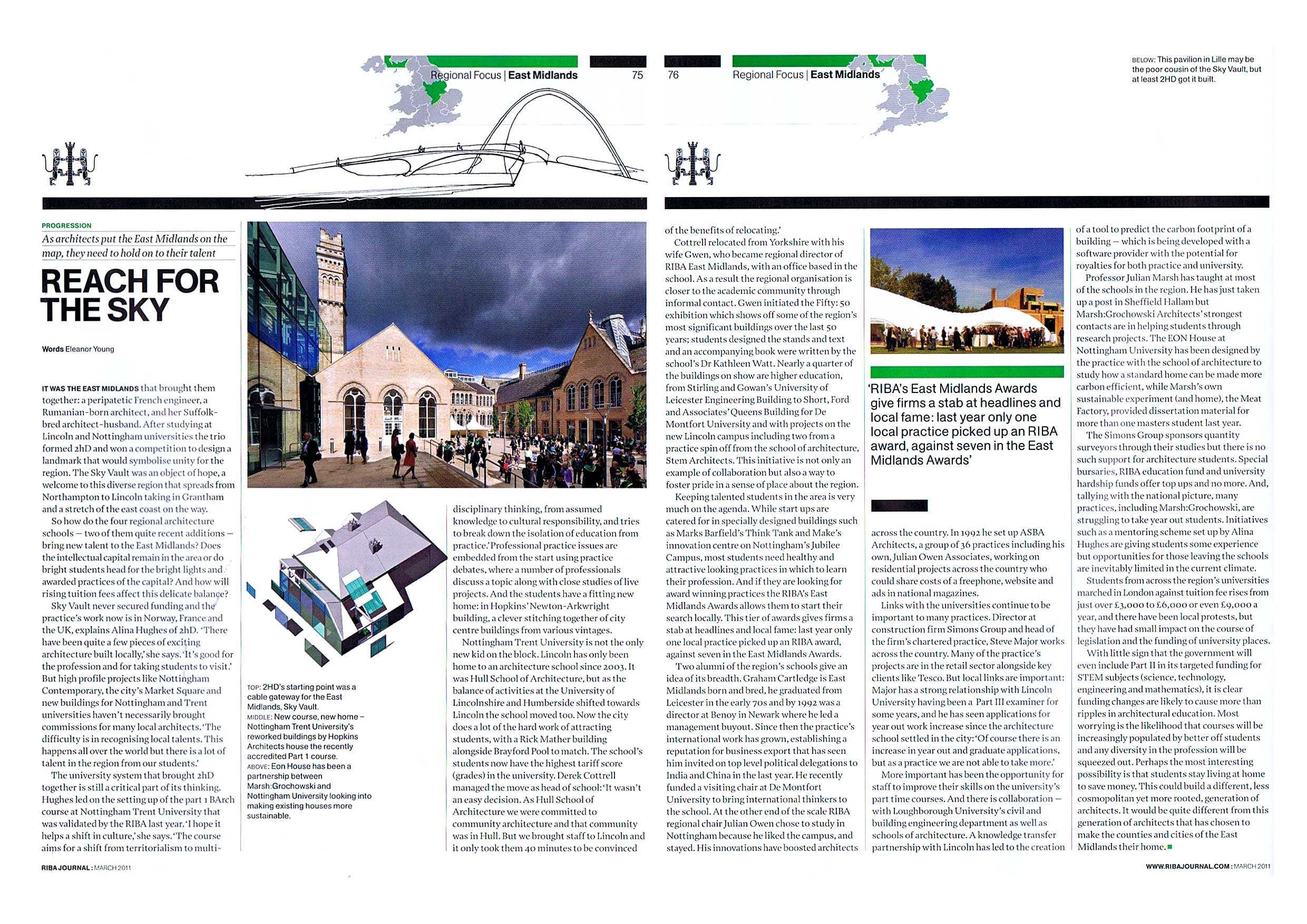
This pavilion received an architecture award from the Royal Institute of British Architects (RIBA) East Midlands in the Out of Region category, in September 2011.

This project has also been shortlisted for the World Architecture Festival Award 2011.

At night, the integrated lighting system transformed the structure into a beacon, softly glowing in the park.

At night, the integrated lighting system transformed the structure into a beacon, softly glowing in the park.


Portfolio project
A painter's studio and home office

Tom Hughes

After retiring from his career as a journalist, our client needed additional space at home and asked us to design a new art studio that could also be used as an office for his freelance work. Our design was Highly Commended by the Royal Institute of British Architects (RIBA).

The studio provides an ideal environment for focused work while establishing a strong relationship with the garden.

This is the kind of project that is set for architecture students as a way of exploring space, light, and client needs, but few get the chance to actually make such a building later in their careers.

Primarily, the need was for space to focus on his artistic endeavours as a painter, but also to allow for freelance home working. This gave us the chance to design for excellent daylight quality and a quiet, contemplative, single person space.

An interesting aspect of this project was that the client had already chosen a local craftsmen builder, so we were able to collaborate from an early stage to achieve an exciting design with confidence that it could be built. The unusual design of the roof and structure, necessary to achieve the quality of space and light that we wanted, pushed the builder into some unfamiliar territory, but he responded with some excellent craftsmanship and produced a building of which he and the client are very proud.

The studio is carefully placed to complete the layout of the garden and to make best use of natural light and views out. The interior space is dramatic for such a small building, but it also has a cosy and relaxed feel, supporting long periods of focused creative work. The building is very well insulated with a small woodburning stove, used only in the coldest times, to provide all the heating needs.

This project has been Highly Commended at the RIBA East Midlands Awards 2009!

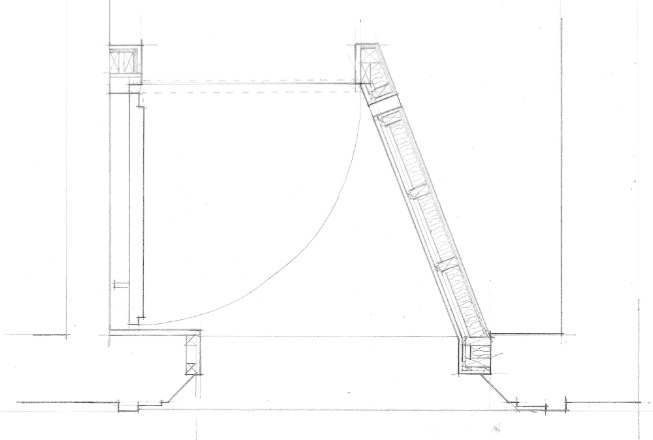
Sketches were an essential communication tool throughout the design process, from the early briefing with our client to the discussion of construction details on site with the builders

Our client was delighted with the thermal comfort and the quality of natural light in his new studio

As a freelance journalist and amateur painter I wanted a flexible working space set apart from the house, with a district personality that would, nevertheless, not clash with the village setting. 2hD’s proposals fulfilled my checklist and the practice worked intelligently with us and our builder to realise these ambitions.

The studio is a real joy. Being flooded with natural light and with high levels of insulation, it uses little energy. I seldom turn on the lights, even on the gloomiest of days, and the stove is only lit occasionally, as the building keeps a regular temperature throughout the year.
Michael Hughes, client and user