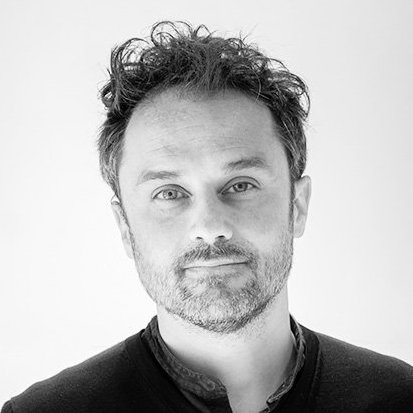
Our second collaboration for the Synergi exhibition in Oslo was with artist Carlos Martin, to create an engraved table as a memorial for Norwegian architect and resistant Frithjof Reppen (1893–1945).
One of the first Norwegian architects to introduce the modernist movement to Oslo, Reppen was arrested in 1941 and imprisoned for being part of a group publishing and distributing Jøssingposten, a newspaper opposing the nazi occupation. Deported to a concentration camp near Vienna, he was eventually shot dead by his captors in 1945.
The starting point for this installation was to transform an existing wooden picnic table, located in the garden of Reppen’s housing block on Professor Dahls gate 31-33, his most emblematic architectural project in Oslo.
With no apparent connection to Reppen, this mundane object — a standard garden furniture mass produced in cheap wood during the 1980s — was transformed into a receptacle for the memories of the residents of the housing block.
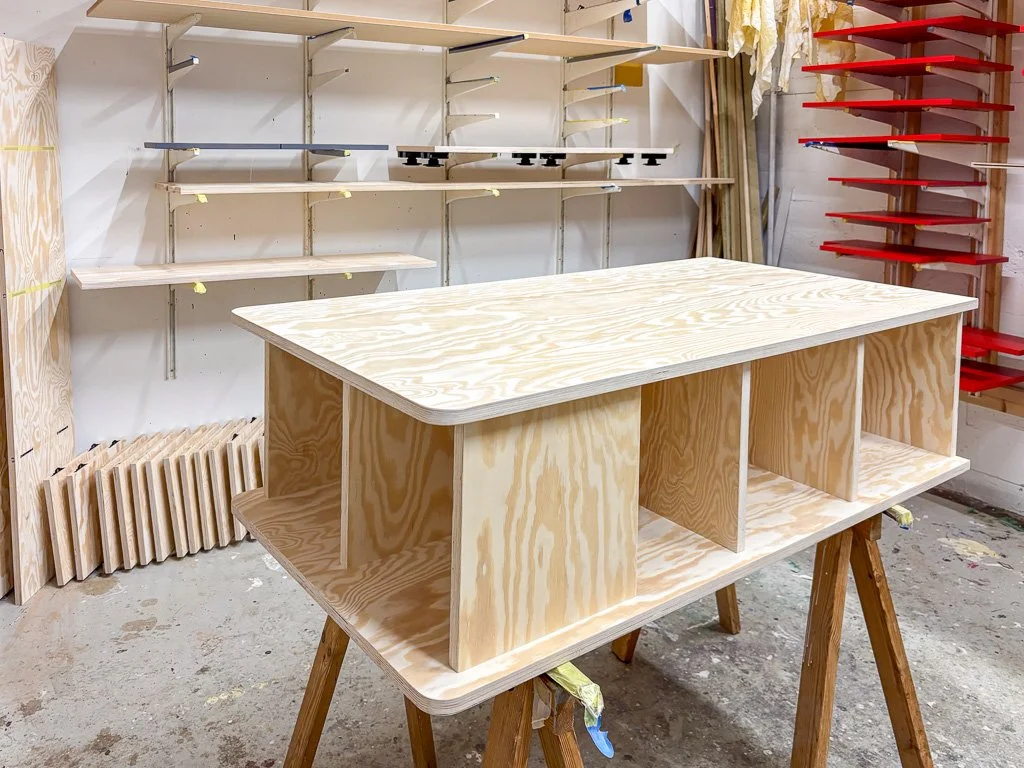
We then fabricated an exact copy of the existing table. But rather than using the impregnated wood of the original, the new copy was made with ore-wood (Malmfuru, in Norwegian), a cured heartwood from old-growth mountain pines, the same highly durable wood famously used in Norwegian stave churches dating back from the 12th century.
In parallel, the residents of the housing block were invited to reflect upon Frithjof Reppen’s history and to adorn the old table with their thoughts, using white paint markers.
These writing were finally digitalised and carved into the new table, creating an identically engraved copy.
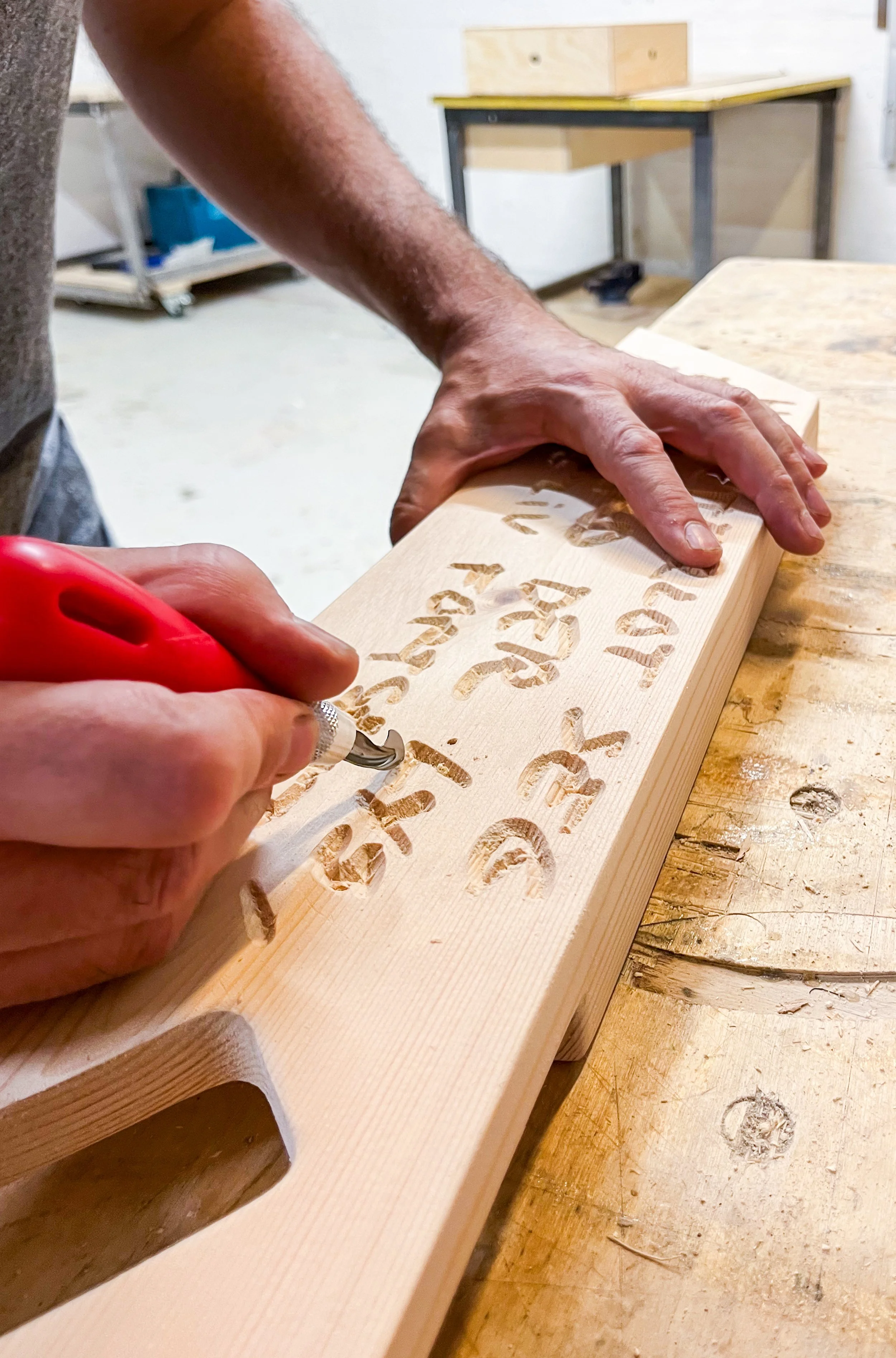
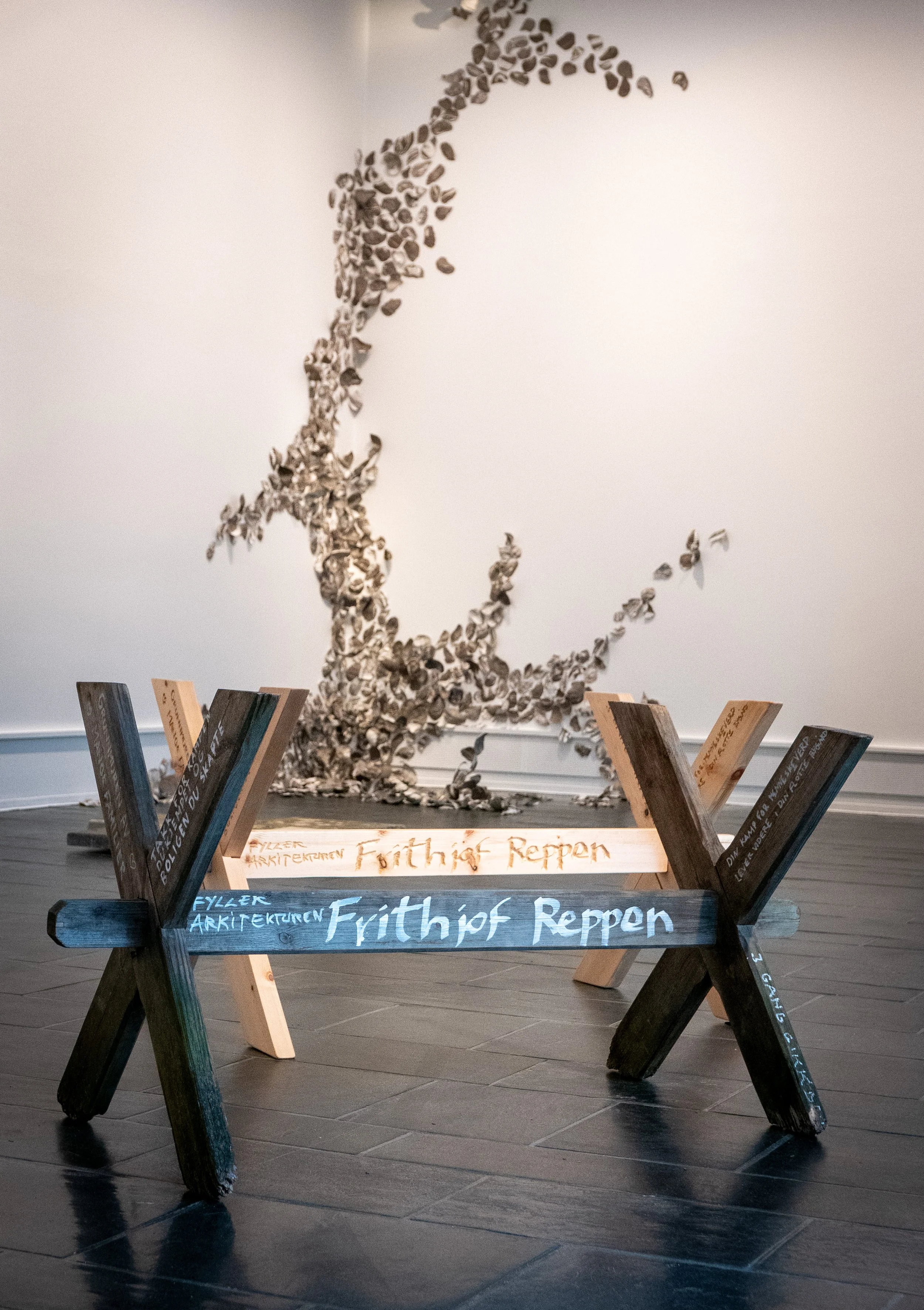
Detail of the engraved surface of the new ore-pine table
The exhibition presented the frames of the two tables side by side, collecting the story of Frithjof Reppen: the dilapidated old table with its paint writings, and our new, engraved ore-pine version. A contrast between the mundane mass-produced picnic table treated with environmentally harmful preservatives, and the new identical table, with memories engraved into its naturally durable material.
At the end of the exhibition, the new table replaced the old one in the courtyard of Reppen’s housing block, and became the material support for a community-based piece of memory of architectural, political and social history.
We would like to thank Kroloftet and Sameiet Professor Dahls gate 31/33 for their financial support, as well as Peter Magnus for his assistance during fabrication. The ore-pine was supplied by the excellent Svenneby Sag og Høvleri.