Portfolio project
In memory of Frithjof Reppen

Thibaut Devulder

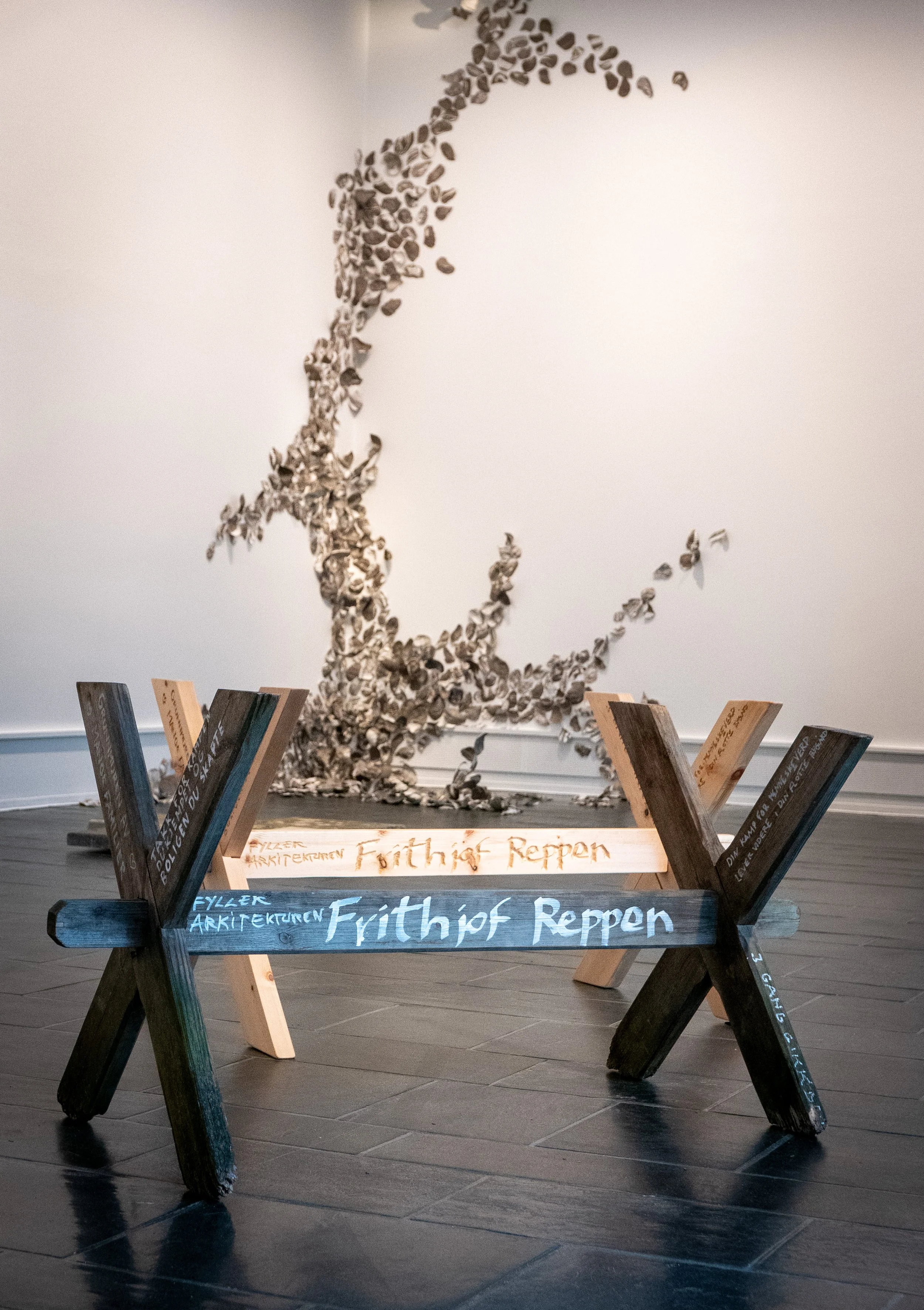
Our second collaboration for the Synergi exhibition in Oslo was with artist Carlos Martin, to create an engraved table as a memorial for Norwegian architect and resistant Frithjof Reppen (1893–1945).

The frame of the old table with its painted inscriptions, in front of the the new carved frame in ore pine (displayed at the Synergi exhibition, in Oslo)

One of the first Norwegian architects to introduce the modernist movement to Oslo, Reppen was arrested in 1941 and imprisoned for being part of a group publishing and distributing Jøssingposten, a newspaper opposing the nazi occupation. Deported to a concentration camp near Vienna, he was eventually shot dead by his captors in 1945.

The starting point for this installation was to transform an existing wooden picnic table, located in the garden of Reppen’s housing block on Professor Dahls gate 31-33, his most emblematic architectural project in Oslo.

With no apparent connection to Reppen, this mundane object — a standard garden furniture mass produced in cheap wood during the 1980s  — was transformed into a receptacle for the memories of the residents of the housing block.


We then fabricated an exact copy of the existing table. But rather than using the impregnated wood of the original, the new copy was made with ore-wood (Malmfuru, in Norwegian), a cured heartwood from old-growth mountain pines, the same highly durable wood famously used in Norwegian stave churches dating back from the 12th century.

In parallel, the residents of the housing block were invited to reflect upon Frithjof Reppen’s history and to adorn the old table with their thoughts, using white paint markers.

These writing were finally digitalised and carved into the new table, creating an identically engraved copy.
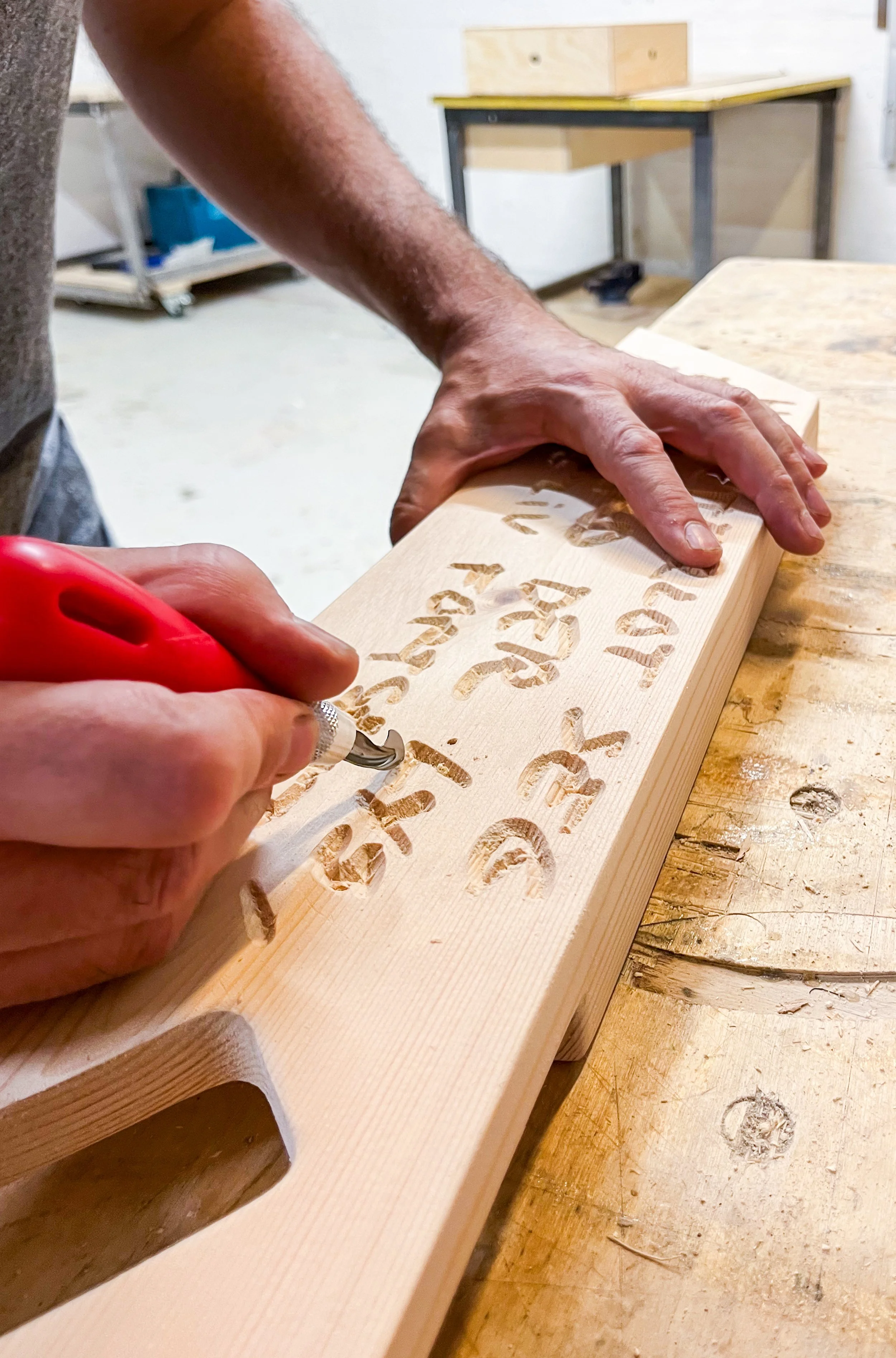
Detail of the engraved surface of the new ore-pine table

The exhibition presented the frames of the two tables side by side, collecting the story of Frithjof Reppen: the dilapidated old table with its paint writings, and our new, engraved ore-pine version. A contrast between the mundane mass-produced picnic table treated with environmentally harmful preservatives, and the new identical table, with memories engraved into its naturally durable material.

At the end of the exhibition, the new table replaced the old one in the courtyard of Reppen’s housing block, and became the material support for a community-based piece of memory of architectural, political and social history.

The new engraved table in the garden of Reppen's housing block on Professor Dahls gate 31-33, Oslo


We would like to thank Kroloftet and Sameiet Professor Dahls gate 31/33 for their financial support, as well as Peter Magnus for his assistance during fabrication. The ore-pine was supplied by the excellent Svenneby Sag og Høvleri.

Portfolio project
Riddle: a sculpture from waste plastic

Thibaut Devulder

Future Makers is a Nottingham-based creative studio who has been spending the last five years researching the potential of waste plastic, bringing together the local community, design creatives and artists to create innovative artwork and products.
Having recently acquired a whole set of waste plastic recycling and manufacturing equipment (which we have already started experimenting with), they announced an open call for a lead artist to craft an outdoor public artwork in front of their building, using one tonne of locally-sourced plastic waste.

The street facade of the existing Waste Plastic Studio (photo © Future Makers)


Our proposal

Continuing our exploration of community-built urban interventions in Nottingham, we responded to this open call with a diaphanous facade sculpture, to transform the Future Makers' building itself into a large art piece, and create a visually striking and intriguing street presence that hovers over the public space.

Questioning the ubiquitous nature of plastics in today's built environment and consumer society, the sculpture takes the form of a diaphanous mesh appearing to deform in and out of the building facades, to exude from the fabric of the building itself: the manifestation of the presence of plastics in a new, recycled form — and its metamorphosis from undesirable waste to creative potential. This large undulating sculptural mesh creates a unified identity across the site, linking the public space, the building entrance and the large industrial shed at the back.


How we use recycled plastic

Despite its visual complexity, the mesh of the sculpture is created entirely out of identical recycled plastic modules, assembled in a repeating reciprocal pattern. The mesh derives its three-dimensional shape from the pattern of assembly of these modular components, linked together with a simple zip-tie-like "cilium" component.

Building the sculpture

The form of the sculpture emerges not from the complexity of its components, but from the assembly process itself: simply varying the pattern of assembly along the mesh allows shear, deformation and stiffening of the surface into a complex shape that symbolically intersects with the building's facades.

Assembling the sculpture is deceptively simple and can happen almost entirely on the ground, before being attached to the facades. The assembly and erection of the different sections of the sculpture will be carried out during community workshops involving neighbours, local schools and fellow artists, creating a sense of ownership while introducing a large audience to the potential of recycled plastics as a creative material, through practical, hands-on workshops.

Examples of alternative assembly patterns for the modules that can be combined to create different levels of curvature and stiffness, and achieve the desired three-dimensional mesh form


Continuing our journey

Since its inception, 2hD has explored the relationship between architecture, visual arts and community engagement, through a series of successful international art projects ranging from architectural pavilions to collective sculptural work, interactive installations, scenography and audio-visual performances.

The common thread through all these different projects is our personal research into architectural elements as a receptacle for our own stories, emotions and daydreams, introducing a fractional dimension to surfaces to invite this projection — and exploring how, in turn, it affects how we perceive and inhabit the spaces they define.

This proposal also keys in with our love for reusing ubiquitous and repurposed materials: transformed cardboard boxes for collective community sculptures in The Lost Cuckoo, recycled plastic tubing to introduce school children and architecture students to complex geometries during hands-on teaching sessions, and natural fiber broom heads to clad an entire building for our Mission Control micro-office.


Portfolio project
A birdwatching 'eyrie' to hover over Wicken Fen

Tom Hughes

We recently achieved Planning Permission for a new birdwatching hide and observation deck for the National Trust at Wicken Fen, Cambridgeshire.

Set at the edge of the fen, the structure was inspired by the singular setting of the SSSI site. The fully accessible birdwatching hide is nestled like a cocoon inside a screen of undulating timber battens. The observation deck above gives view over Sedge Fen, roosting site for Marsh and Hen Harriers. A final eyrie-like observation level gives 360° views ,which take in the whole of Wicken Fen nature reserve and the big skies for which it is famed.

The building nestles into the Carr (tree scrub) at the edge of the Fen.

The highly sensitive eco system of the site is based on 3 meters depth of peat soil, so the structure is designed in collaboration with Canham Consulting Engineers to “touch the earth lightly”, elevated above the Fen on piles so that the habitat can flow underneath. A gently ramped boardwalk, designed for wheelchair accessibility, connects the hide to the existing boardwalk footpath some 30m away.

A fully accessible bird hide at the entry level floats 1.5m above the fen, upper levels can be explored via a triangular staircase to the rear.

Wicken Fen is the National Trust’s oldest nature reserves and one of the most important wetlands in Europe, supporting over 9000 species including a spectacular array of plants, birds and insects. 2hD won the commission via a competitive interview in partnership with Sheltered Spaces, with whom we went on to design the timber cladding and the public consultation process. It is a great privilege to be entrusted with such a sensitive site and to be supported by a client keen to think afresh about how visitors might experience and understand the Fen’s sense of place.

Project team:

Timber screen experiments with Marcus of Sheltered Spaces

2hD Director Chris Heuvel appointed RIBA Fellow

Tom Hughes

Our director Chris Heuvel is one of only 15 architects to be awarded Royal Institute of British Architects Fellow status in the 2018 list. The RIBA says of the award that "Fellow Membership gives us the opportunity to recognise our inspirational Chartered Members, the sometimes unsung heroes of the profession, who have made a real contribution to architecture, and the community."

Chris3.jpg

Chris' full citation reads as follows:

"Chris is a Director at 2hD Architecture Workshop and a lecturer at Nottingham Trent University (NTU), where he delivers the professional practice elements of both the undergraduate and postgraduate architectural programmes, in addition to acting as Professional Studies Advisor for students in practice. He also runs the Design Studio module followed by first year undergraduates.

Chris champions architectural education as an integral aspect of professional practice, and is currently undertaking a major research project on behalf of NTU into how practitioners’ engagement with their local communities can be compatible with their business development objectives. All his teaching is substantially informed by a lifetime of active involvement in community engagement projects – previously in Norfolk and now in Nottingham, where (in conjunction with 2hD Ltd) he is currently helping a local group develop a business plan for the revival of their recently closed community centre."

Congratulations Chris, the recognition is thoroughly well deserved!

Can architectural skills help save a local landmark?

Tom Hughes

Tom and Chris have been working with a 'community alliance' in Sneinton, Nottingham.  A local historic building, much loved by the community, is under threat of demolition. We've offered our community engagement and architectural skills to "dOSH" (Development of the Old School Hall) which has formed to find a sustainable use for the site.

Bringing the community together to share knowledge and ideas.

The Old School Hall building dates from the 1840s. Originally a school standing on the boundary between Sneinton and Nottingham, the building served generations of pupils. When in the 1960s a new modern school was opened just up the road, the Old School Hall community centre was created on the site. Many local residents have positive associations with the building as both a school and community centre, so the news that it had closed, and would face demolition, came as a significant blow.

Through his work with Sneinton Neighbourhood Forum, meeting with local Councillors, residents and community groups, Tom helped to arrange a public meeting to bring together all interested people and groups. The strategy was to ensure good information was in the public realm about the threat faced by the building, and to find out whether there was an appetite to try and save the building or to reuse the site for another purpose. The Council had revealed that the building would require a significant investment to make it safe for use and for refurbishment. Despite this, a strong will was identified to try and find a new use for the building, retaining some element of community access whilst securing a viable income stream to maintain the building for the future

Tom attended these meetings and helped the group to come together, structured appropriately as an 'Unincorporated Association' with a clearly defined remit: "To help save the Old School Hall by meeting to discuss feasibility and develop ideas arising from the community to create a business plan". He also researched the history of the site, created posters, spread the word through social media and set up a website and blog for the dOSH group: www.doshsneinton.org.uk

By happy coincidence at this point, Chris was putting the word out to community groups, offering free consultancy as part of his research at Nottingham Trent University. He has been advising the dOSH group on understanding the existing building, seeking advice on the structural stability and condition including liaising with structural engineers and reviewing existing condition reports.

The challenges facing the group are extensive, but the collaborative approach we have helped to foster, in getting organised and understanding both problems and visions, has started things off on the right foot.


The groups represented in dOSH include:

Tom & Chris working on NTU research project

Tom Hughes

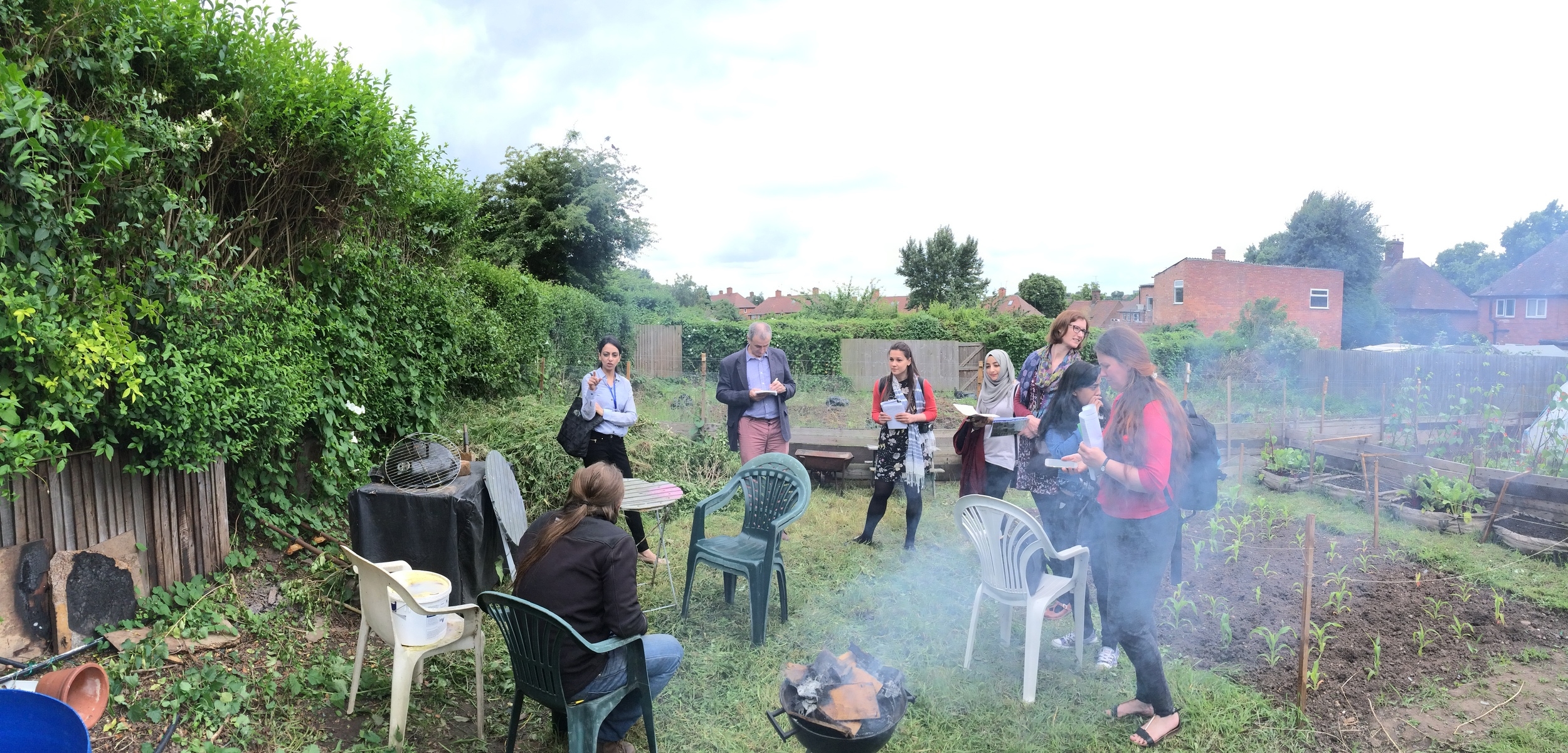
We were out and about in Sneinton, the area around our Nottingham base, yesterday as part of a research project at Nottingham Trent University's School of Architecture and The Built Environment. This was an orientation walk for researchers and student volunteers involved in a project to map Nottingham's identity, and we were able to contribute our local knowledge of the area's history and recent developments. Leading the walk was Community Organiser Shabana Najib of Sneinton Alchemy, who are the local community partners in the project.

Visiting local community project Growin' Spaces at Dale Allotments in Sneinton

Visiting local community project Growin' Spaces at Dale Allotments in Sneinton

The research will also cover Carrington in Nottingham, with outputs and further engagement planned for the Nottingham Central Library in September. You can find out more and get involved via the research project blog.

Community inspired architecture

Tom Hughes

I teach with fellow 2hD Director Chris Heuvel at Nottingham Trent University (NTU) and I'm a director of Sneinton Alchemy — a Community Interest Company based in Sneinton, 2hD's local neighbourhood in Nottingham. Sometimes this mix of roles is a bit demanding, but more often than not there's a symbiosis, bringing strength and depth all round.

And so it was with a recently-completed project to design a small community allotment building for the "Growin Spaces" project in Sneinton.

Alchemy has been training a team of Community Organisers over the last few years: dedicated individuals who go out into the community to listen carefully to people on the streets, in pubs, in mosques, churches and homes. They listen to the young and old, to workers, business owners, those in power and the disenfranchised. They build community networks and gradually empower people to take action, follow their dreams and build a stronger community. And it works.

Growin' Spaces

One "proof of the pudding" is the Growin' Spaces project - set up by Stevie Doig. He had an idea about a community allotment which, over time working as a volunteer Community Organiser, he built into a reality. Listening with our team at Alchemy helped him build the mandate he needed to get the wider community on board. This ensured the sustainability of the project and gave him confidence to make broader links and gain important contracts and supply lines.

Now Growin' Spaces has transformed many abandoned allotments into productive growing space, providing work experience and structure for long term unemployed along the way. The project also feeds hundreds of local people each month, using allotment produce and "Fare Share" food wasted by supermarkets.

Low-tech architecture

The success of the project has generated the need for small buildings on site at the allotments. Initially a place to shelter and lock up equipment, this might expand over time to provide a learning space and other facilities. So Stevie asked me, with my 2hD hat on, if I might be able to help him explore design ideas.

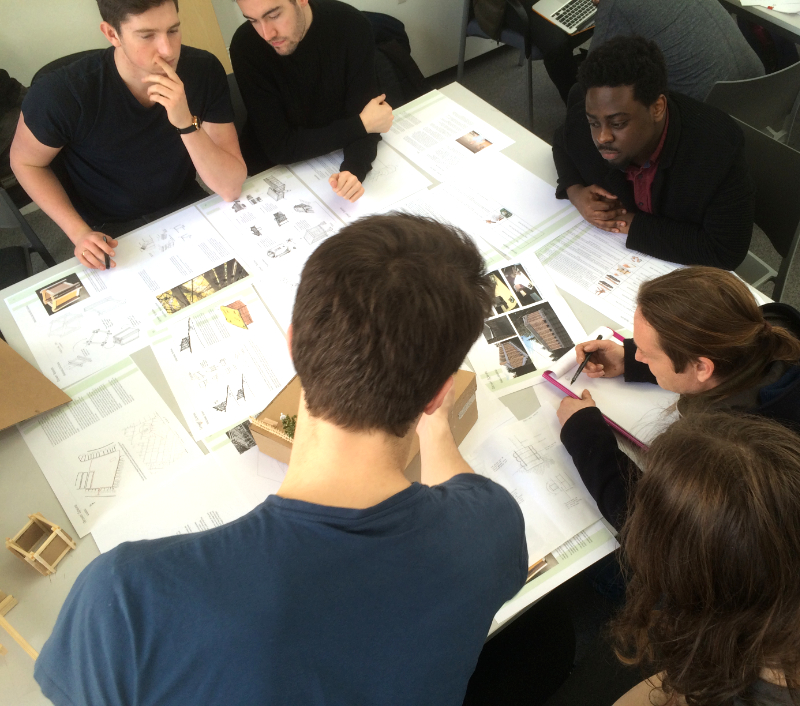
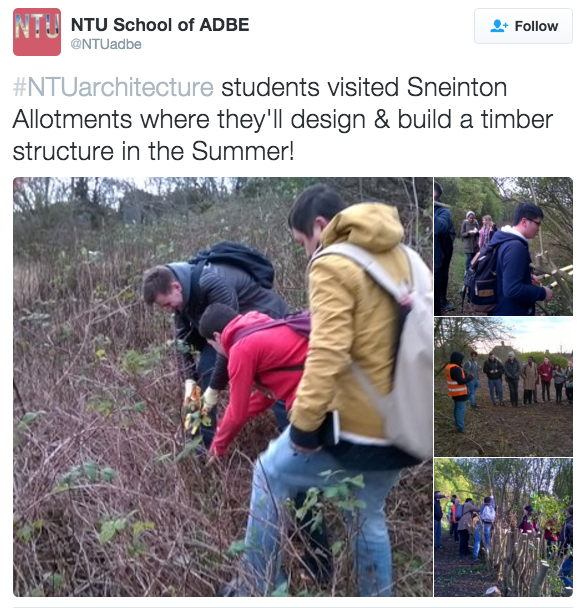
I teamed up with Chris and we identified an opportunity at NTU to create an architecture studio student design project. Chris got the students out on to the allotments, meeting Stevie and his volunteers, and pitching-in with some clearance work. This experience inspired them to create imaginative but buildable designs for a small wooden building using low-tech timber framing. 

Stevie and the Community Organiser team then came to NTU to interview the students and select their favourite designs. These projects were displayed at the "Our Sneinton" public event, with a winner being chosen by popular vote. Over the summer, the building will be built!

Great outcomes, including for NTU meeting a number of the objectives of its new Strategic Plan, including "enriching society", "valuing ideas", "creating opportunity" and "empowering people".

So for 2hD, NTU, Sneinton Alchemy and Growin' Spaces, it´s a win, win, win, win situation.

Community inspired architecture at its finest!

Chris' doctorate research proposal accepted by NTU

Chris Heuvel

Further to our social sustainability ethos, we want to learn more about how we can grow as a practice as a result of (rather than in spite of) our involvement in community engagement activities.

This topic has been recognised by Nottingham Trent University School of Architecture as a suitable subject for investigation within the context of their professional doctorate programme, and Chris has therefore been developing a formal research proposal since the beginning of January.

Chris would welcome any correspondence on this subject: please read his Practice and Community blog and email him with your comments or suggestions.

Self-build land shelter gets its roof

Tom Hughes

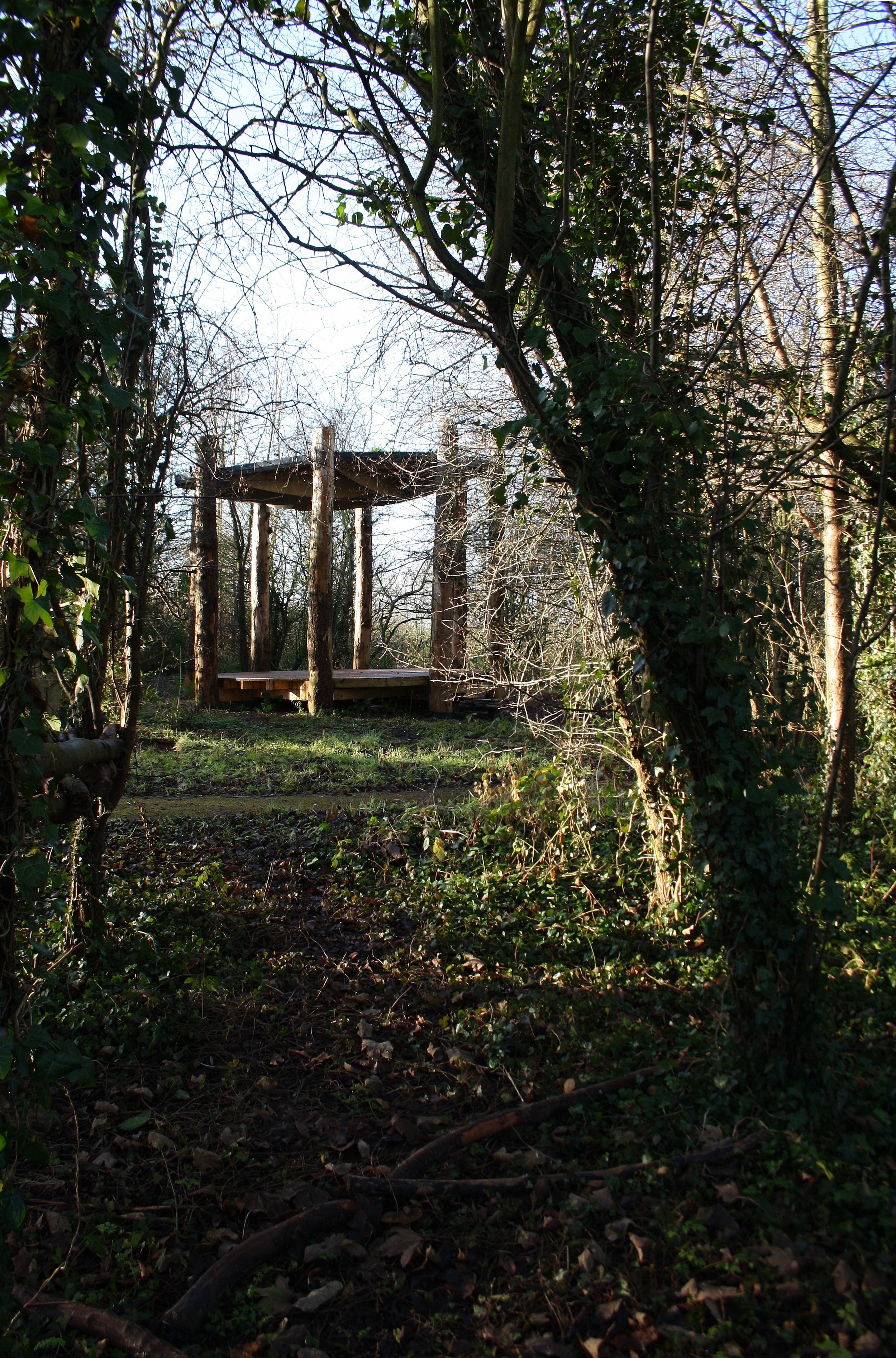
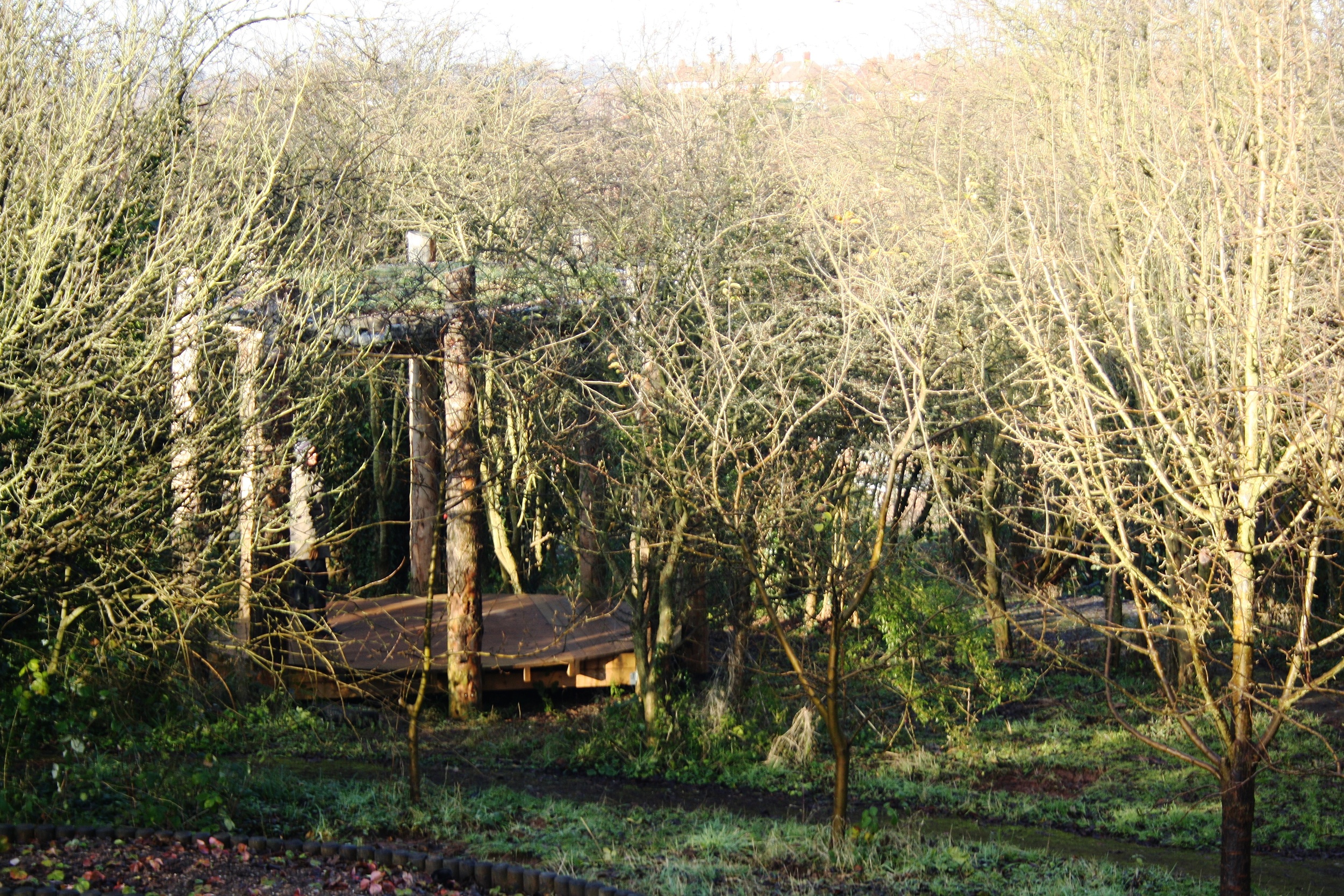
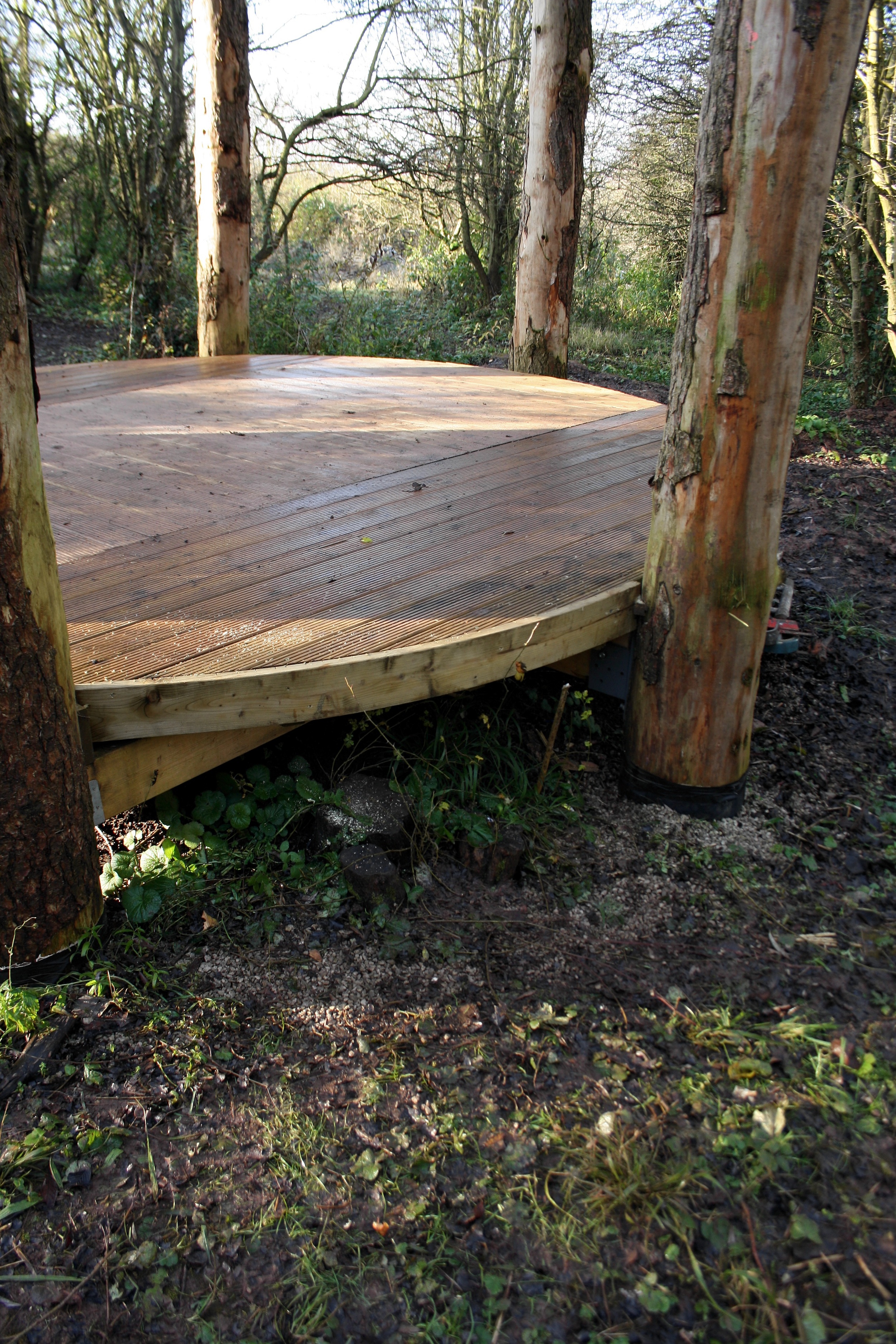
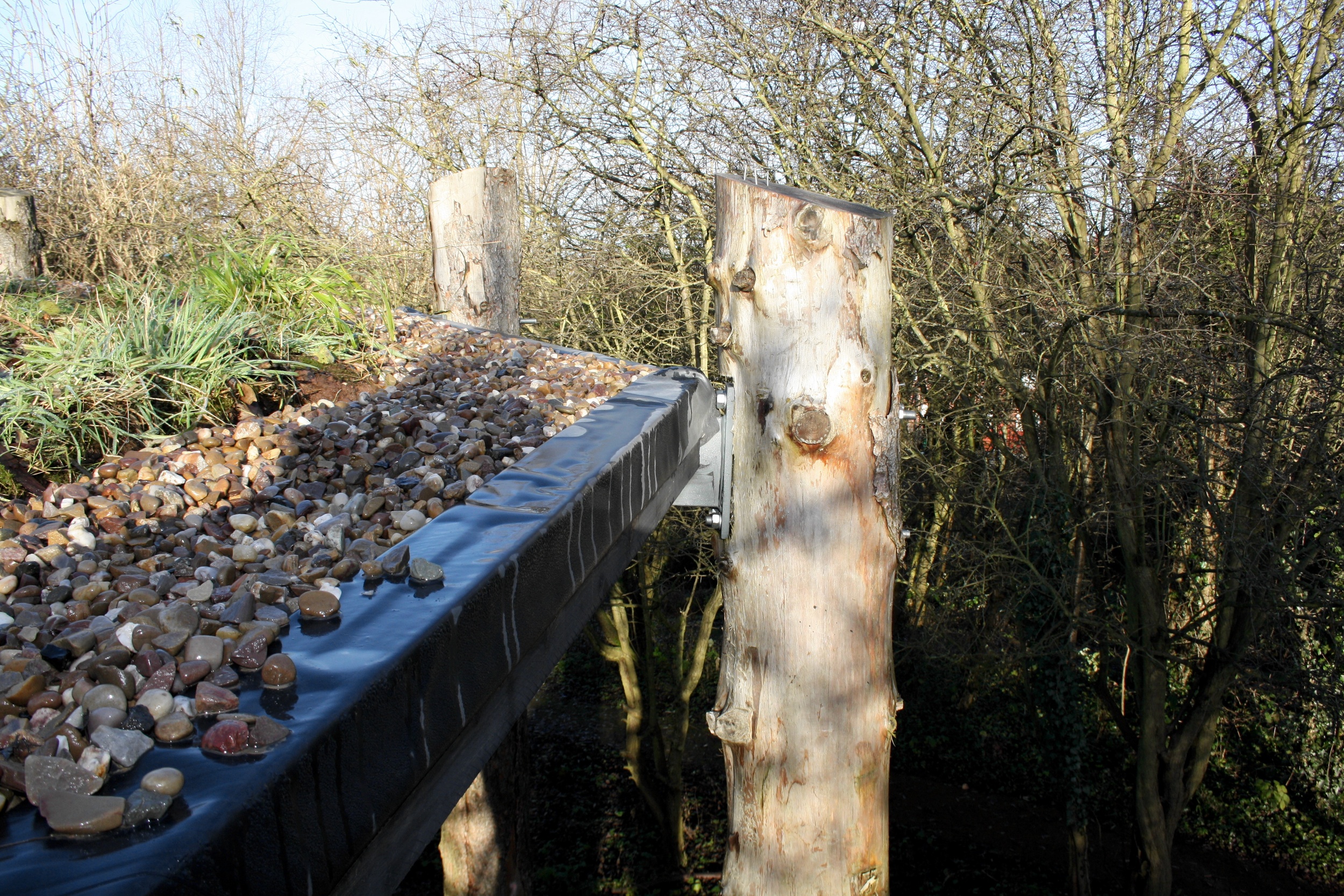
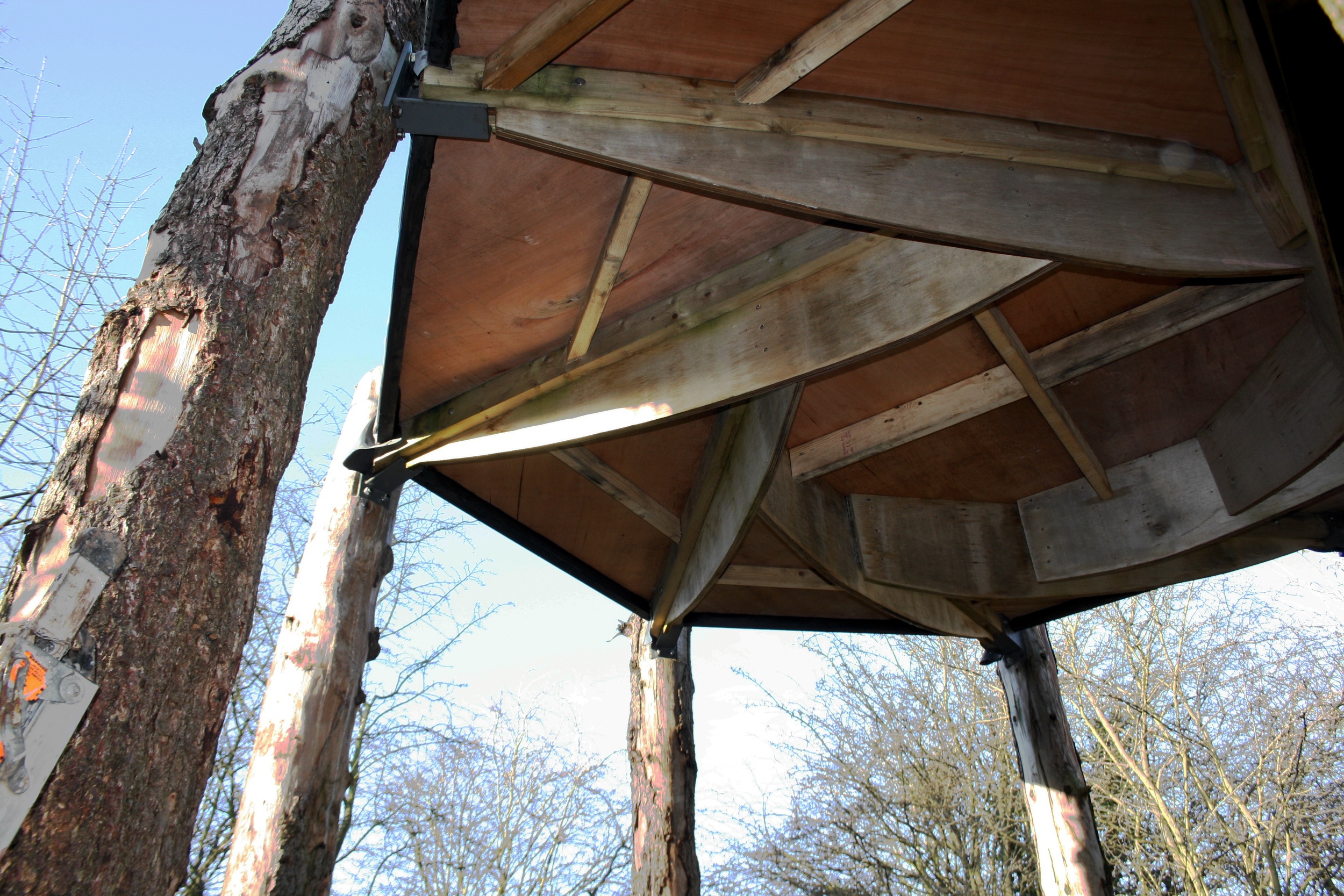
I spend a great couple of days helping put the roof on the shelter Alina designed for Iona School in Nottingham. The shelter structure consists of 8 larch tree trunks supporting a circular deck and a plywood reciprocal frame roof. Now topped with turf it blends in with its woodland setting from some angles and takes on an almost temple-like appearance from others. The shelter will be used as an outdoor classroom for pupils at the school, which offers Steiner education with activities often based on the land. 

You can find out more about the shelter, the build process and the people involved at the project blog.

Holding a creative space

Thibaut Devulder

The participatory arts magazine Mailout has published an article about our collaboration with artist Marcus Rowlands for our Lost Cuckoo public art project.

Written as a dialogue between Marcus, Tom and Thibaut, the article explores the role of artists and architects in the creative process and the idea of holding a creative space for public participation.

You can read the article on Scribd.

The full version of this issue of Mailout is also available online for purchase.

A Design Vision for our neighbourhood

Tom Hughes

I've been heavily involved over the last few months in the creation of a Neighbourhood Design Vision for Sneinton, the area of Nottingham where 2hD are based. I'm delighted to say that the Vision has now been launched to the public, with its own website and a downloadable PDF document.

In June last year I picked up on a letter from the UK Chief Planner, which set out the role of Design Council CABE (Commission for Architecture and the Built Environment), in giving advice on good design for neighbourhoods

The UK planning system is in the process of a major overhaul aimed at giving local communities a greater input, part of the Government's "Localism" agenda. I was interested in how Sneinton might be able to put together a grass-roots vision of its own future, to ensure that Localism works as intended for the area.

The essential problem was how to set out a strong set of ideas to resist poor development, but to encourage good developers by letting them know what local people would support. If resisting the bad is hard, encouraging the good is even more difficult.

As a director of Sneinton Alchemy, a non-profit company run by local people for the benefit of Sneinton, I wrote to Design Council CABE with a copy of the Chief Planner's letter. I asked the question: "What can you do for us?"

The upshot of this was a sucessful joint bid for Design Council CABE funding with OPUN (the architecture centre for the East Midlands), and a 6-month long project to develop the Sneinton Design Vision. You can read the story of how the Vision was created on the Sneinton Alchemy website.

One of the most rewarding parts of the process was the involvement of students from the School of Architecture, Design and the Built Environment at Nottingham Trent University, where I'm a part-time lecturer. Second year architecture students put forward designs for three high-profile sites in Sneinton, the best of which then went forward to an OPUN design review. This saw a panel of industry experts reviewing both the student's designs and a draft version of the Sneinton Vision. 

Developing the Vision has been involved and tough for the local community to support, but the outcome is something we can be proud of. The hope is that this will form the basis of a Neighbourhood Design Plan for Sneinton, which can have real teeth in the planning process.

Lost Cuckoo workshop at NTU

Thibaut Devulder

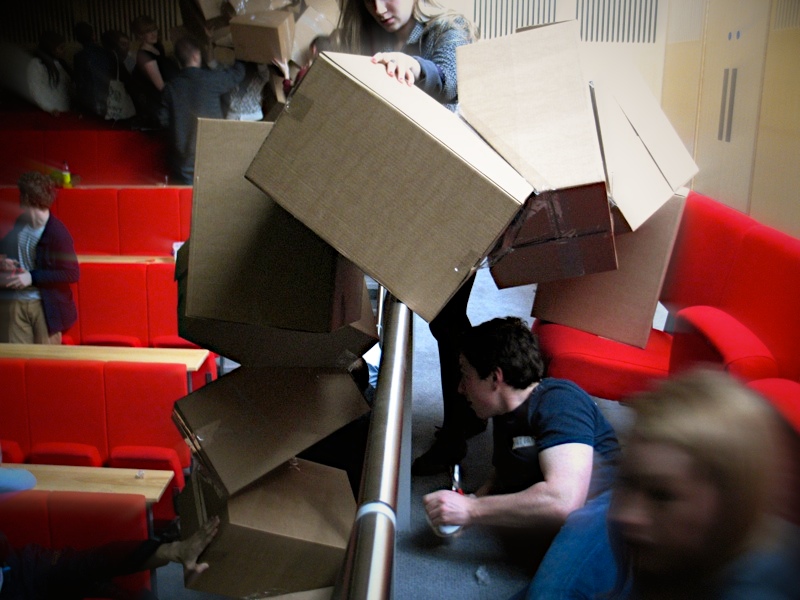
Furthering our exploration and experiments using the cardboard module developed for the Lost Cuckoo project, Marcus Rowlands and 2hD Architects ran two "lectures" at Nottingham Trent University.

Images by Marcus Rowlands and Matthew Mouncey

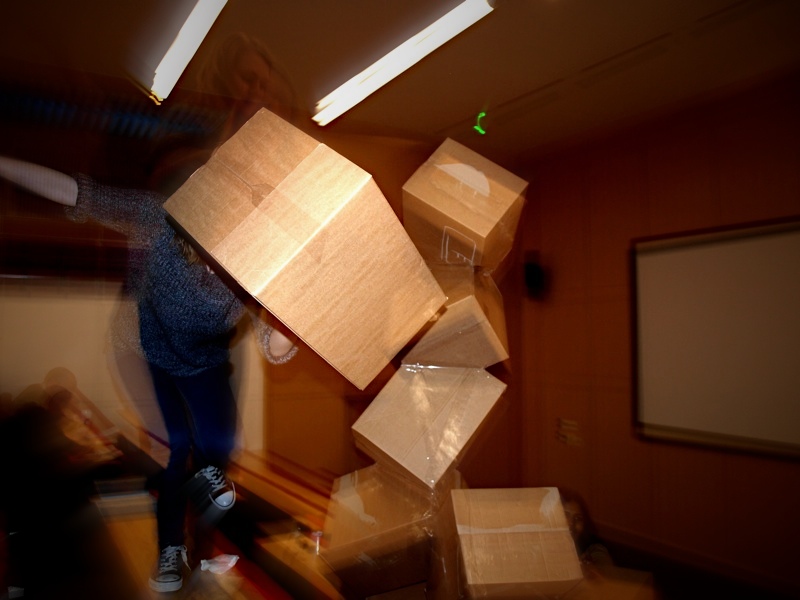
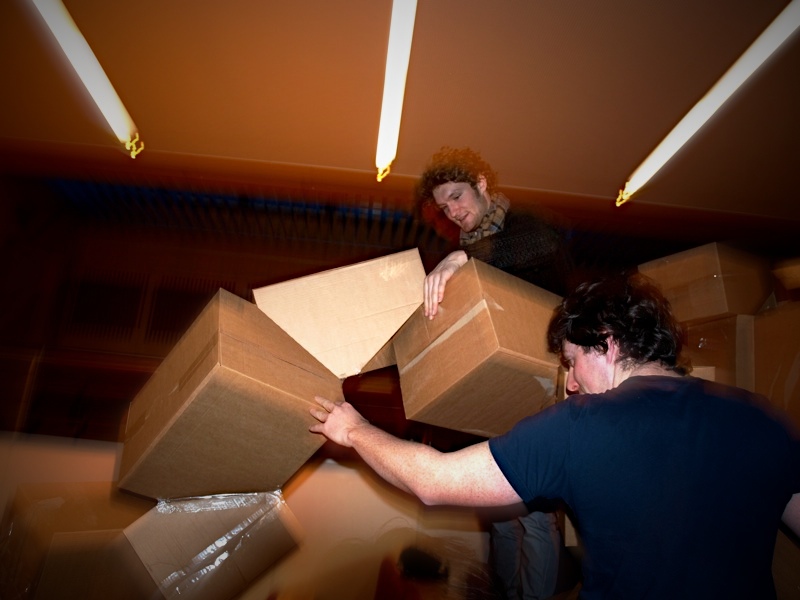
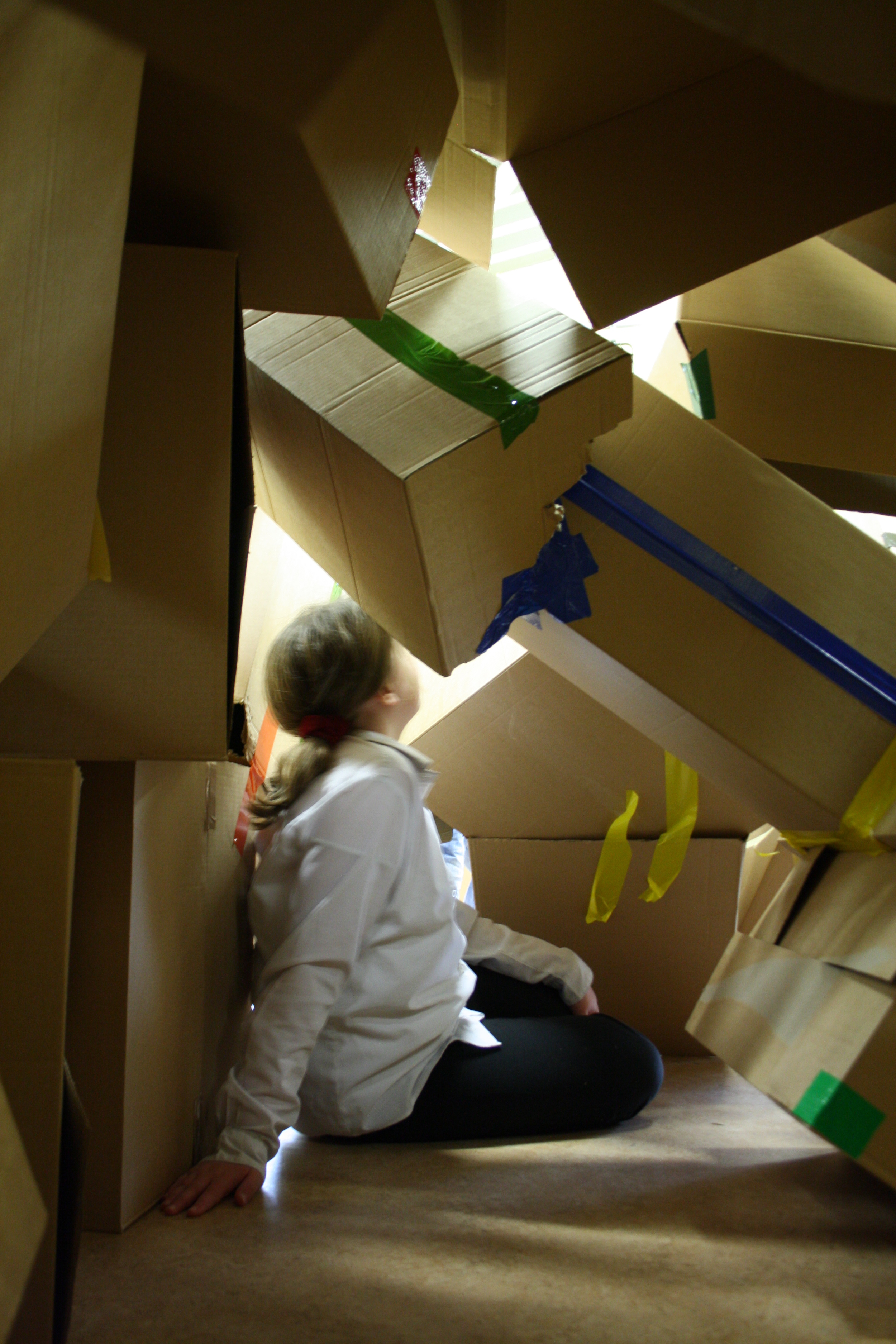
With the participation of staff and students from the School of Architecture, Design and the Built Environment, and in a lecture hall setting. This was, however, not your standard lecture format: the starting point was for each person to build a module, then to team up and build an assembly, and finally to bring everything together to create a space-within-a-space... in which the 'lecture' would happen.

Video by 2hD

Portfolio project
The Lost Cuckoo

Thibaut Devulder

We have put together this short video about our Lost Cuckoo project with artist Marcus Rowlands from the DVD produced by the Lakeside Art Centre, who hosted the event last year.  The project was great fun and we are looking forward to developing this concept in other art festivals this year!

A public art and participation project by Marcus Rowlands artist and 2hD architects, involving pupils, parents and staff from Brocklewood, Melbury and Portland schools in Nottingham. Funded by The Arts Council, Lakeside Arts Centre and Nottingham Education Improvement Partnership, with support from Faspak and Staples. Original footage and sound by Vent Media. 2011.

The Lost Cuckoo project was commissioned and supported by the Arts Council England and Nottingham Lakeside Arts.

Portfolio project
A stone memorial for a Jewish congregation

Tom Hughes

This project is the result of our combined interests in public art, craftsmanship and education. Starting as a student design competition that we organised at Nottingham Trent University for the Nottingham Progressive Jewish Congregation, our design process became an involved exploration of traditional stone walling techniques and complex numerical modelling to create a solemn yet welcoming landscaped space.

This project was shortlisted for the RIBA East Midlands Award for Architecture 2011.

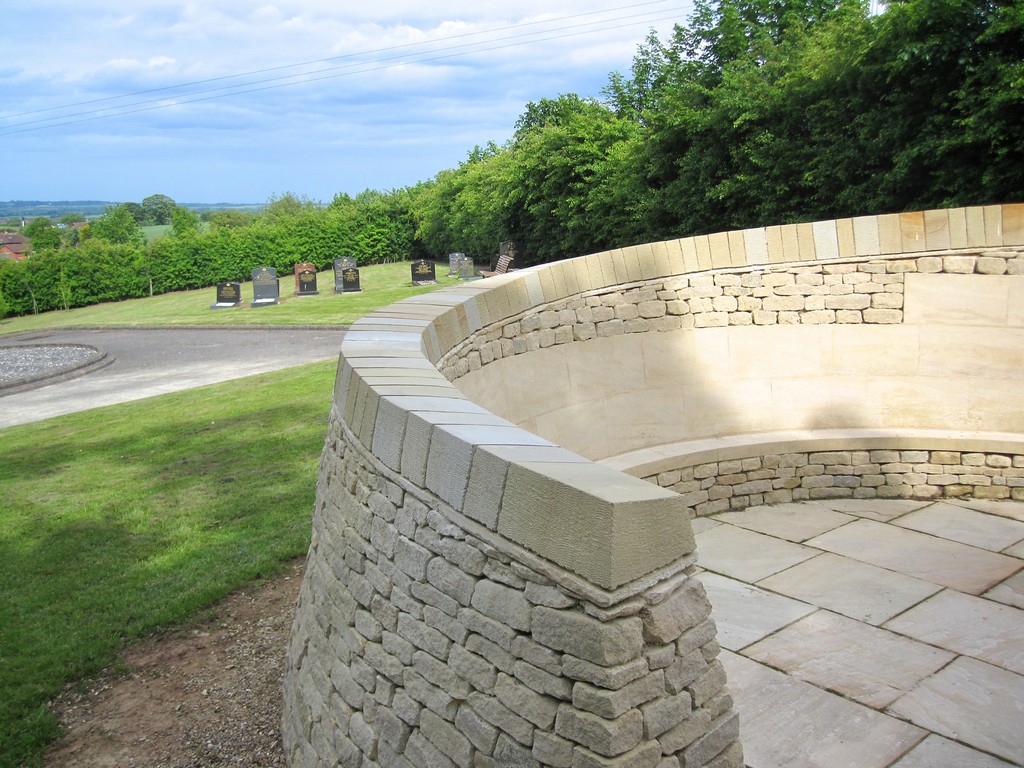
The completed stome memorial, with collaborating artist Igor Barteczko

We were approached by the client to create a memorial structure for their congregation’s cemetery on an exposed hillside with excellent views over the Trent valley. We proposed, set up and ran a design competition for students, then collaborated with the winner to bring the project to completion. We redesigned the competition winning entry, working with the student in the role of project artist, to ensure buildability and adherence to a very restricted budget.

Our innovations on this project include a rejuvenation of traditional craft building techniques and the use of three dimensional computer modelling to achieve the twisting shape using stonework. We developed a custom plugin for our 3D modelling software to help us explore alternative geometries with the stone masons and produce the required three-dimensional templates for the preparation of the curved ashlar stonework.

The first commemorative plaques, on the curved ashlar.

The resulting structure creates a strong sense of place with an intense focus for ceremonial purposes, whilst also framing views out and welcoming visitors in.

The Memorial viewed from the cemetery entrance.


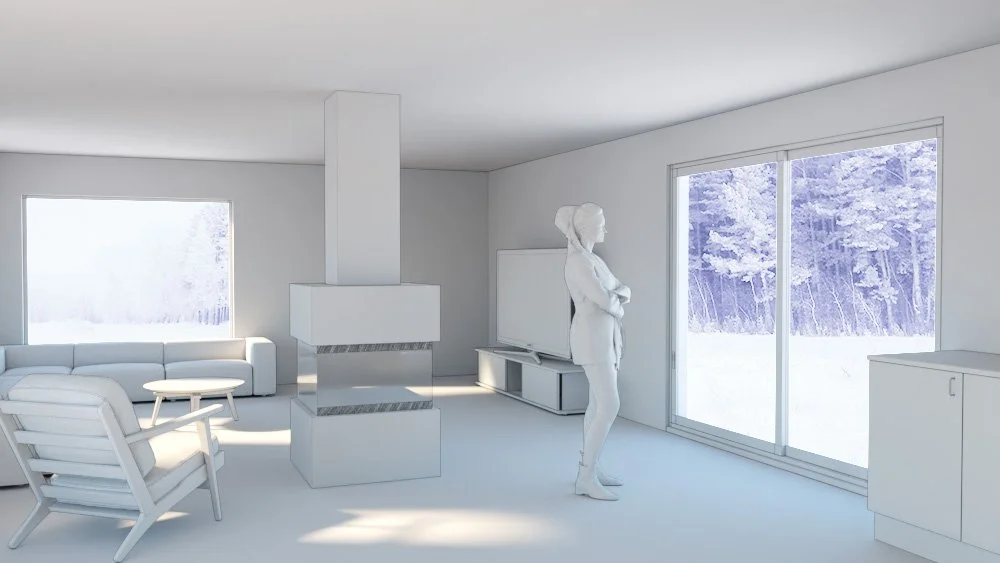
A living-room in a children's home

Tom Hughes

The proof of the pudding, as they say, is in the making. I spent Sunday volunteering at the site of our Childrens' Home project, helping them to get the building phase of their Living Room project underway.

The shared living room, before we started

It's been a fascinating project to be involved in. We were approached by The Mighty Creatives who were looking for someone who could work with the staff and residents at the Home to redesign their living room, making use of IT to communicate and visualise the process. In the end, we used StickyWorld and SketchUp with the LightUp plug-in… and if we could have found another software with a JoinedUp name, we'd have considered that too.

It's a tiny but intense project, and I found the design process really challenging. Working on occupied houses is always pretty involved, as being invited into the home requires a great deal of sensitivity to residents' preferences and relationships. At the same time, your own knowledge and experience as 'the professional' needs to be given a voice. As you'd imagine this particular living space is charged with a lot of meaning for many different people... But, by working together, we gradually achieved a design that everyone could take pride in.

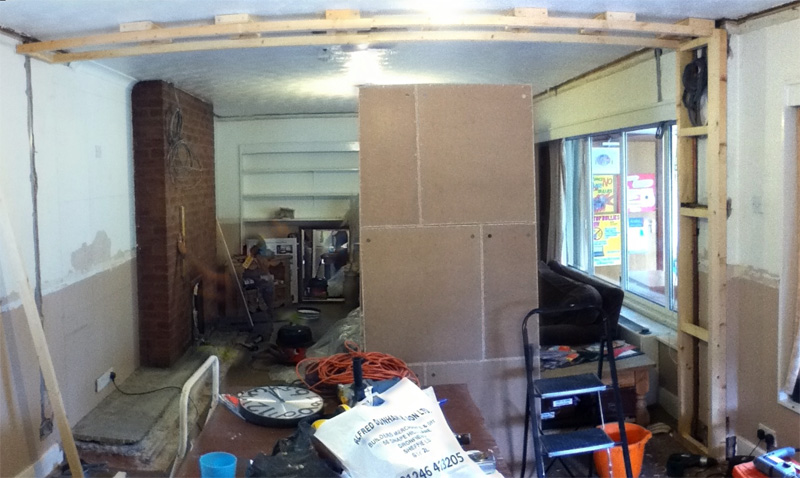
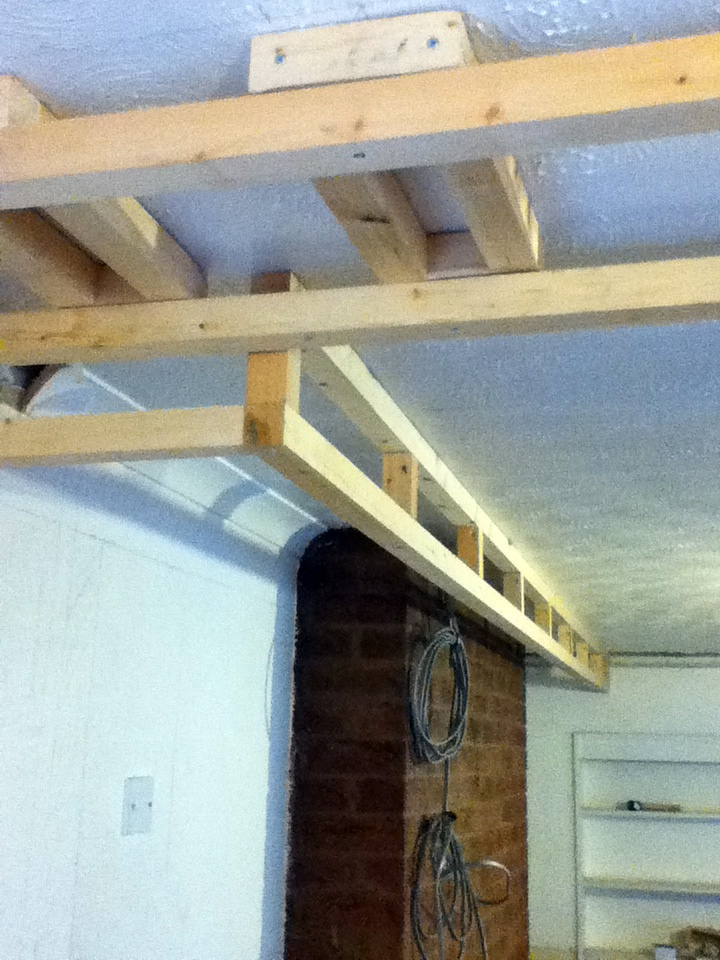
The idea is that as much of the making work as possible is done by the staff and residents of the home, but I invited myself along on Sunday to lend a hand as they got underway. The electrian had already been in to do the first fix, so the next stage was setting out the studwork for the 'portal' feature, the lighting raft and the storage/entertainment wall. We made pretty good progress- a bit slowed by the effort of breaking up the world's densest fireplace hearth, but by the end of the day the design was beginning to pop off the page and in to the space. I loved being there to see this happen and hope to be back again as the project progresses.

In the meantime, we made a little film to celebrate the success of the collaborative design, and keep spirits up during the hard messy work ahead:

Living Room Project from 2hD Architecture Workshop on Vimeo.

Lost Cuckoo report

Thibaut Devulder

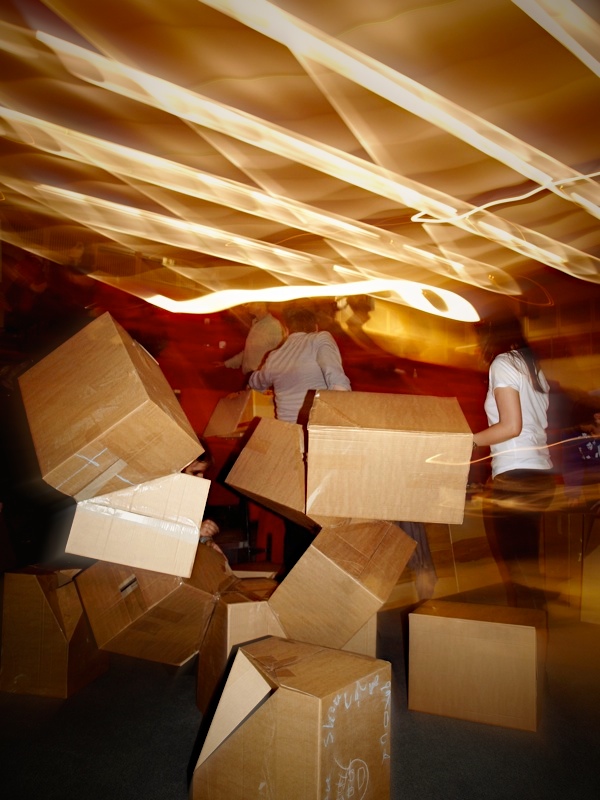
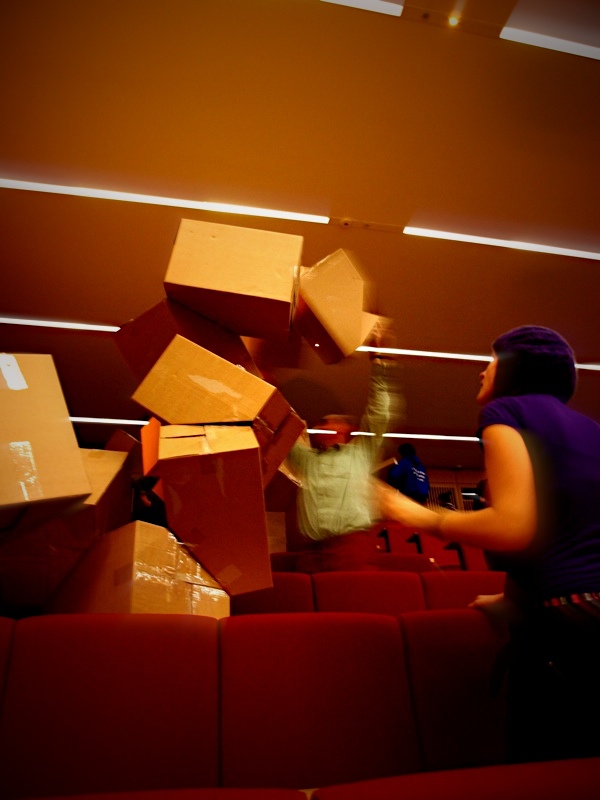
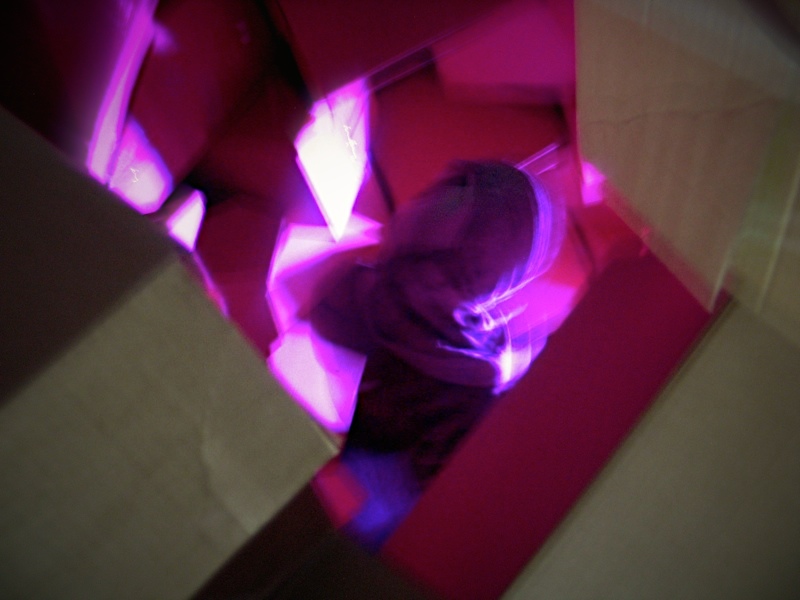
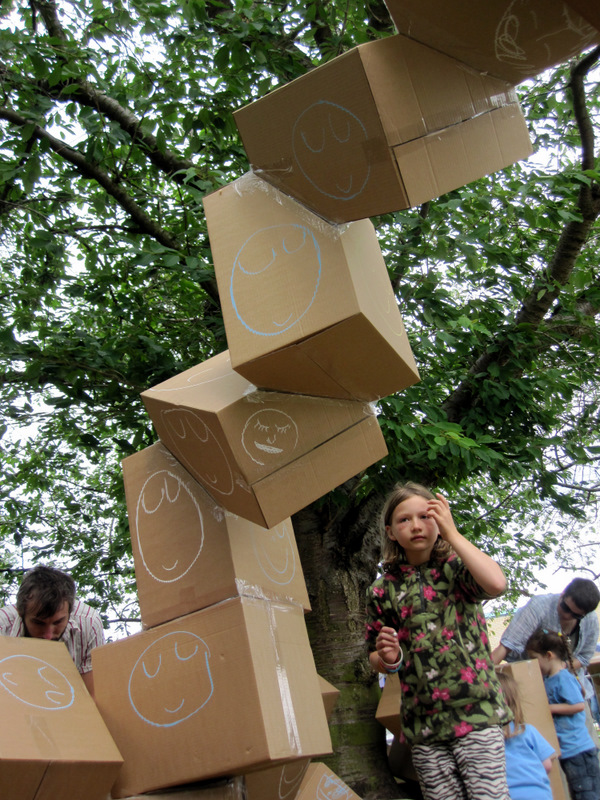
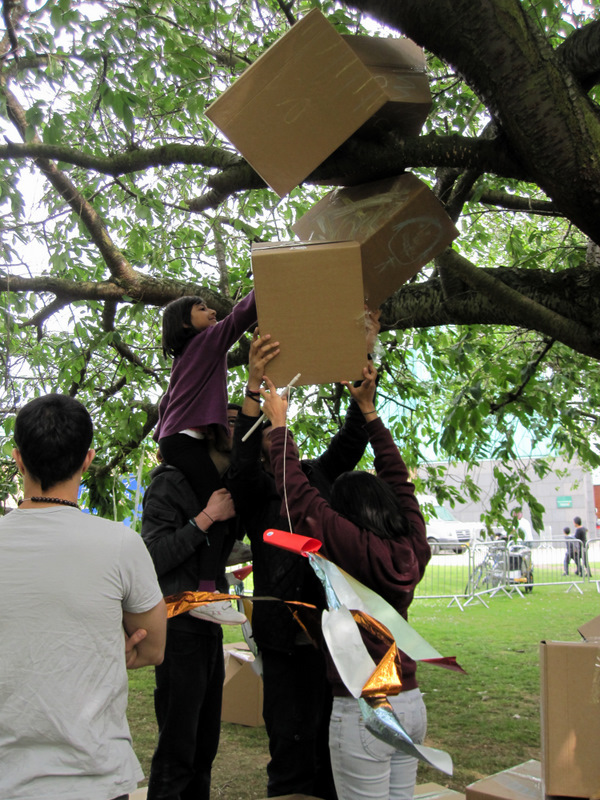
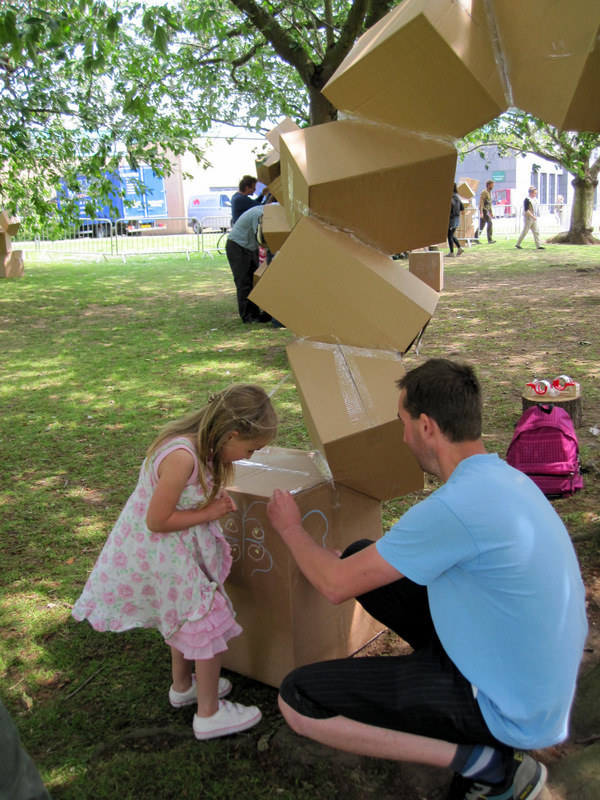
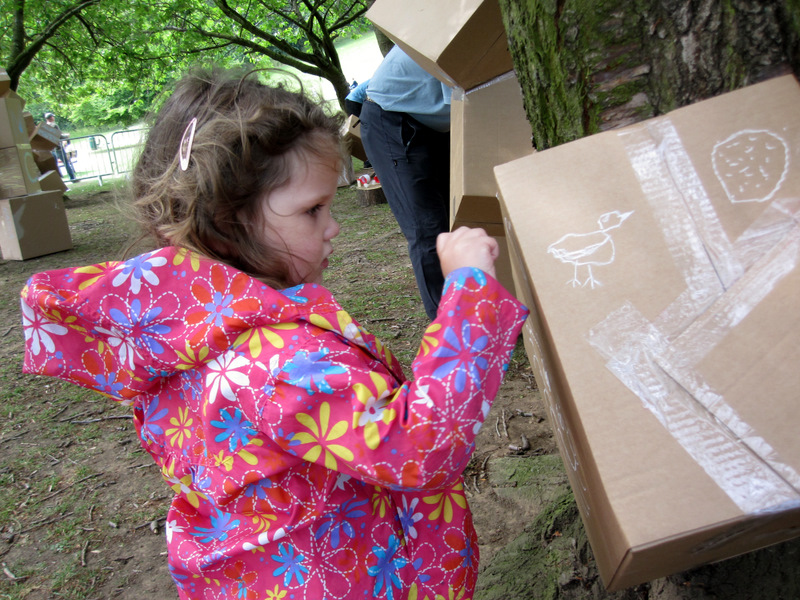
The Lost Cuckoo project culminated last weekend with an event at the Wheee! International Childrens' Theatre and Dance Festival at Nottingham's Lakeside Arts Centre. Nearly 1000 visitors participated in this live public art project, building imaginative and gravity-defying structures.

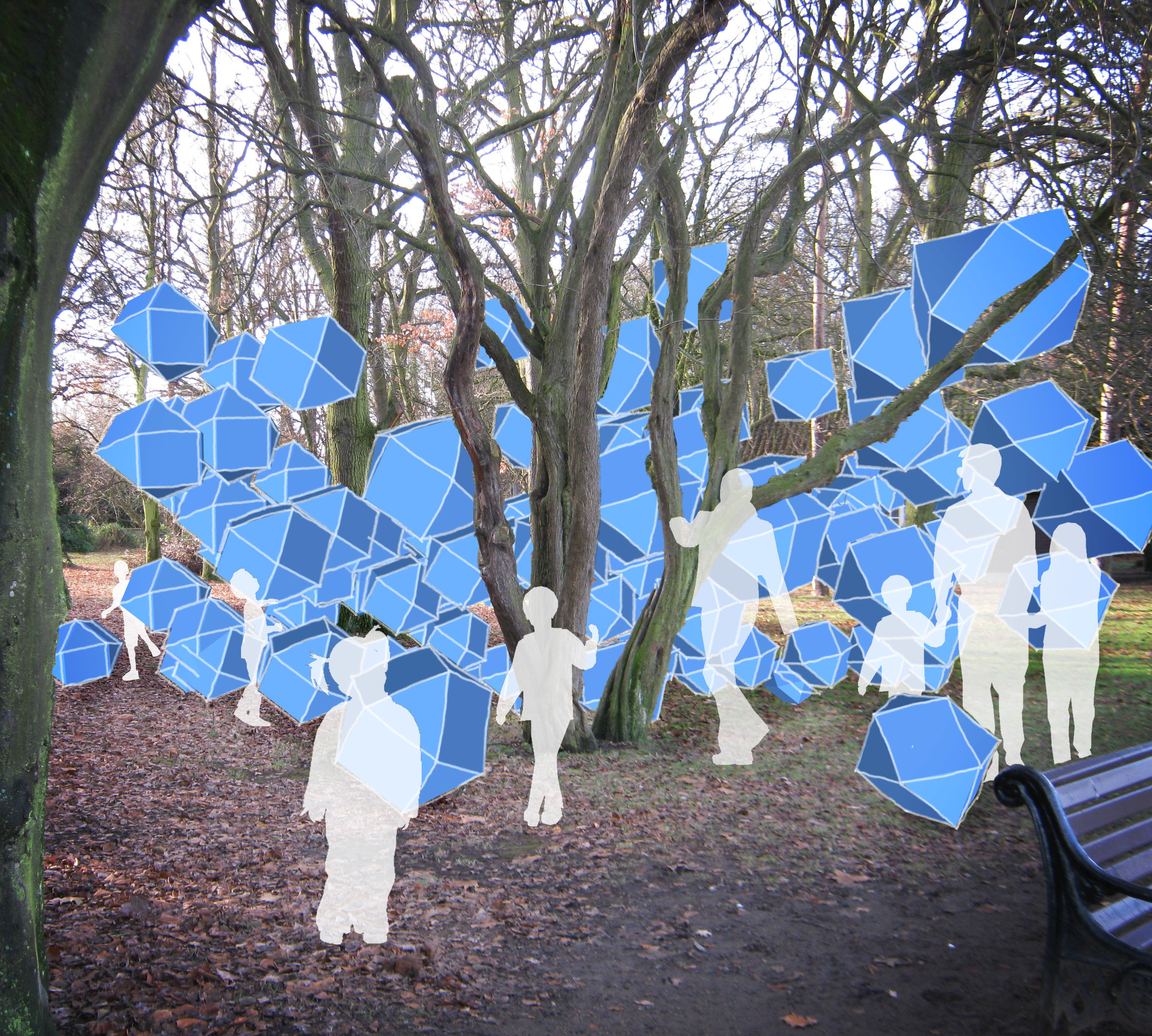
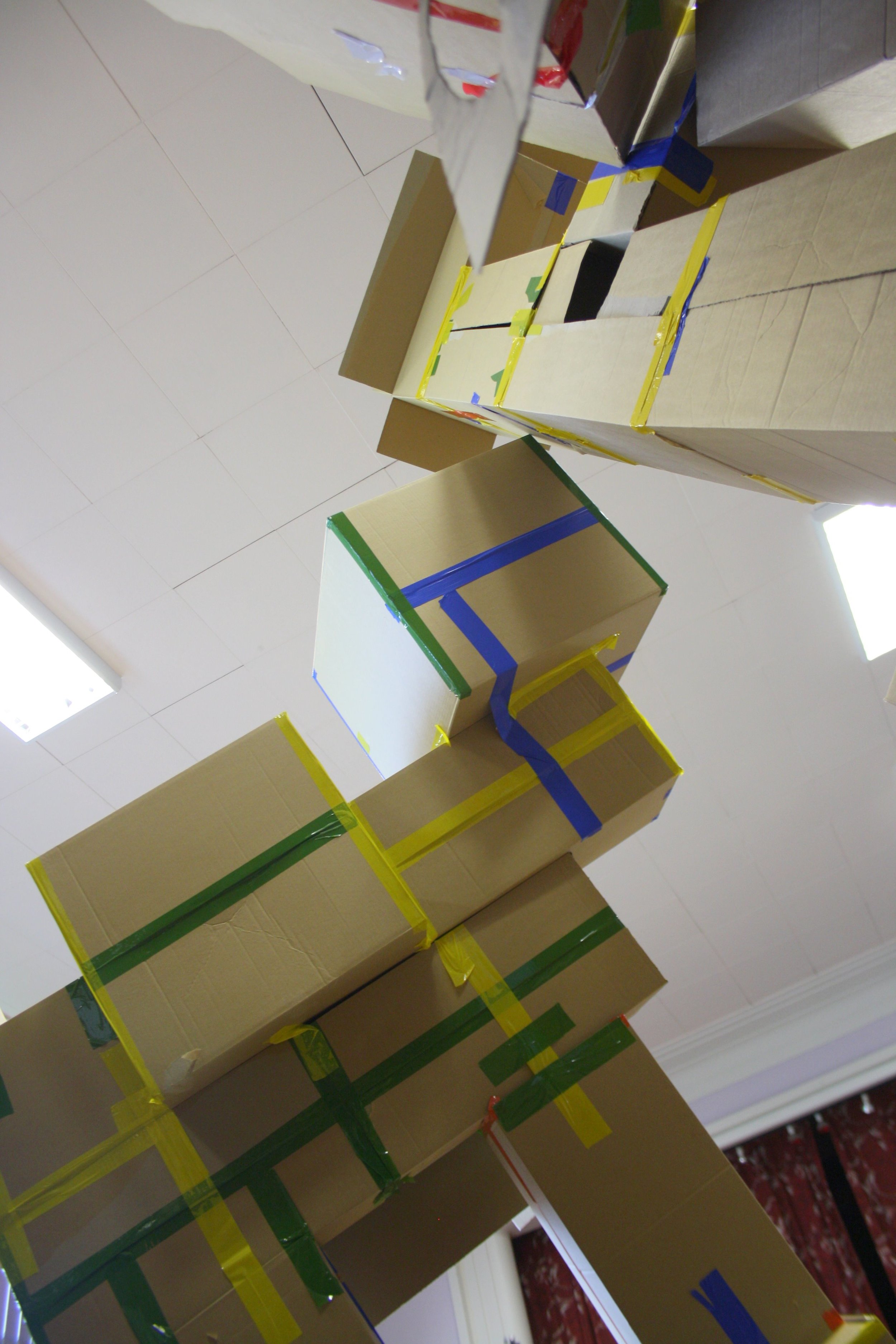
In the weeks leading up to the festival, we designed with artist Marcus Rowlands and families from three schools in Bilborough, a cardboard building “module”. In essence, a box with a “secret corner” that could be popped in to join boxes together at interesting and unpredictable angles.

We've blogged about the project before: You can read more about the process, the event, and catch up on our live blog from the event itself.

We really enjoyed working on this project and are very proud of the results. This is largely down to our brilliant collaborators: Marcus Rowlands, Ruth Lewis-Jones from the Lakeside and — most importantly of all — the children, parents and staff from Portland, Melbury and Brocklewood schools.

Thanks also must go out for the generous support given by the Lakeside Arts Centre, the Arts Council England, Faspak, Staples and Nottingham Education Improvement Partnership.

The Lost Cuckoo takes flight

Thibaut Devulder

We have started work with artist Marcus Rowlands on the Lost Cuckoo project. Working with families from 3 schools in the Bilborough area of Nottingham, we will collaborate on the design of a bespoke cardboard module or system. This will be used by the families and visitors at the International Children’s Theatre and Dance Festival in the live creation of an interactive community sculpture.

In our first set of workshops we asked families to build with standard cardboard boxes and colourful tapes. They produced an amazing array of sculptures and spaces, pushing the boxes to do the unexpected and giving us plenty of inspiration to start the design of our special module.

Further workshops will run over the months until the Festival, on June 4th and 5th at the Lakeside Arts Centre.

This project is being supported by the Lakeside Arts Centre, the Arts Council England, Faspak and Nottingham Education Improvement Partnership.

Adventure Play Centre

Tom Hughes

It's nice to get a recommendation and to support local projects!

This play centre is in need of extra space for an office and creche, and wants to make use of sunken no-man's land corner of their site. However they have no resources for the project until they get funding, and to get that they have to run the idea past the local planners and other stakeholders.

Sometimes in situations like this we can help to break the deadlock by putting a little bit of work in 'up front'. A local contact who we worked with on the Sneinton Trail project put us in touch with the play centre, we went to take a look, and turned out these simple drawings. It's a start.

On one level this is just a feel-good thing to do, but it isn't purely altruistic: it means that there might be a real project sometime in the future (one which would improve our community), we build up a huggable reputation, we might get another recommendation out of it, and we can write and illustrate some self promotional material like this.

Permaculture gardening

Thibaut Devulder

Before winter hits the Serbian hills, I visited the Sokolovica eco-village on the Rtanj mountain in Southern Serbia to help them prepare the gardening raised beds where they will grow most of their food next year.

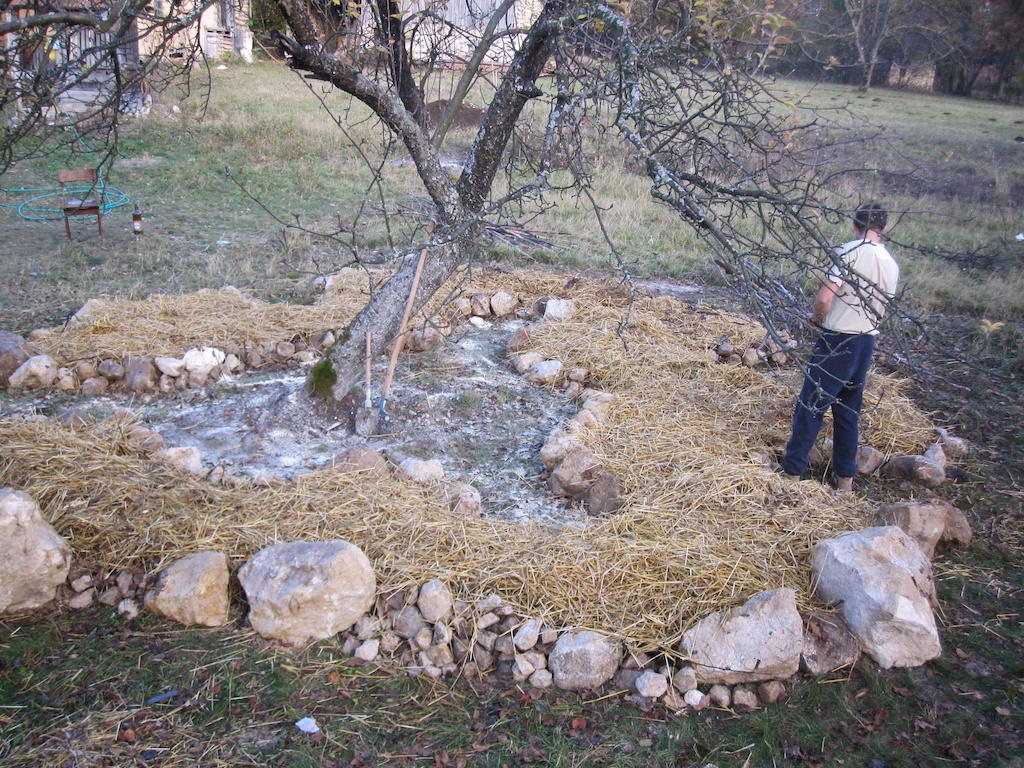
As part of our permaculture strategy, we wanted to set up the first of a series of deeply mulched raised beds. The first beds were to be placed as close to the house as possible, to make then easier to maintain.

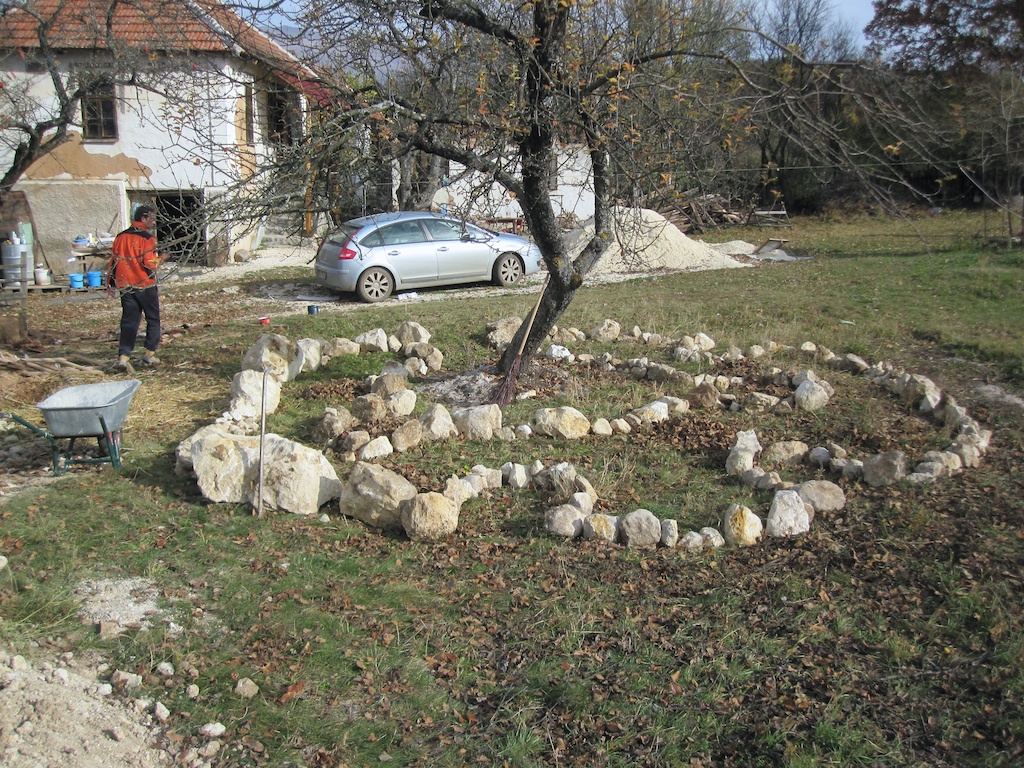
We decided to start small and wrap the first one around a mature apple tree, situated close to the entrance of the site. The shape of the raised bed would follow the drip line of the apple tree (below the perimeter of its foliage), where rain and condensation water tend to naturally get concentrated by its leaves, thus minimising the need to irrigate the bed later on. The drip line is also where the tree’s feeding root are at their densest below ground, so that will maximise interaction with companion plants growing in the raised bed.

Here's a sketch plan of the bed wrapping around the apple tree:

As the raised bed should neither be tilled nor disturbed, we created so called keyhole openings into the bed to allow easy reach to any part of the bed without having to stamp (and compact) the soil.

Placing the bed under the crown of the apple tree made it possible to use its foliage to define a range of different micro-climates in its shadows — protecting the plants below from the hot summer sun and from mid-season morning frosts. The tree foliage would also help protect the bed from the frequent summer thunderstorms, breaking the speed of the rain drops before they could damage the more delicate plants.

The excavation of the nearby reed bed filtering the house's grey water has unearthed a vast supplies of rocks (chalk?) and we decide to reuse some of them to create a border. In addition to keeping the mulch in place, they will provide habitat for small insect predators such as lizards and spiders. Their thermal mass will also play a role in controlling the bed's microclimates: accumulating heat during daytime and acting as condensation traps at dawn. The rest of our full time pest-controlling team — the birds — would happily perch on the apple tree above the bed and keep the insect population under control.

Laying out the raised beds was intuitive and fun: run around the tree with a wheelbarrow to figure the width of path and keyholes. Once this was done, visualising the width of the beds and the position of the keyholes was as as simple as two people walking round while shaking hands — since any part of the bed should be reachable from one of the sides without having to trample the mulch. Refreshingly practical!

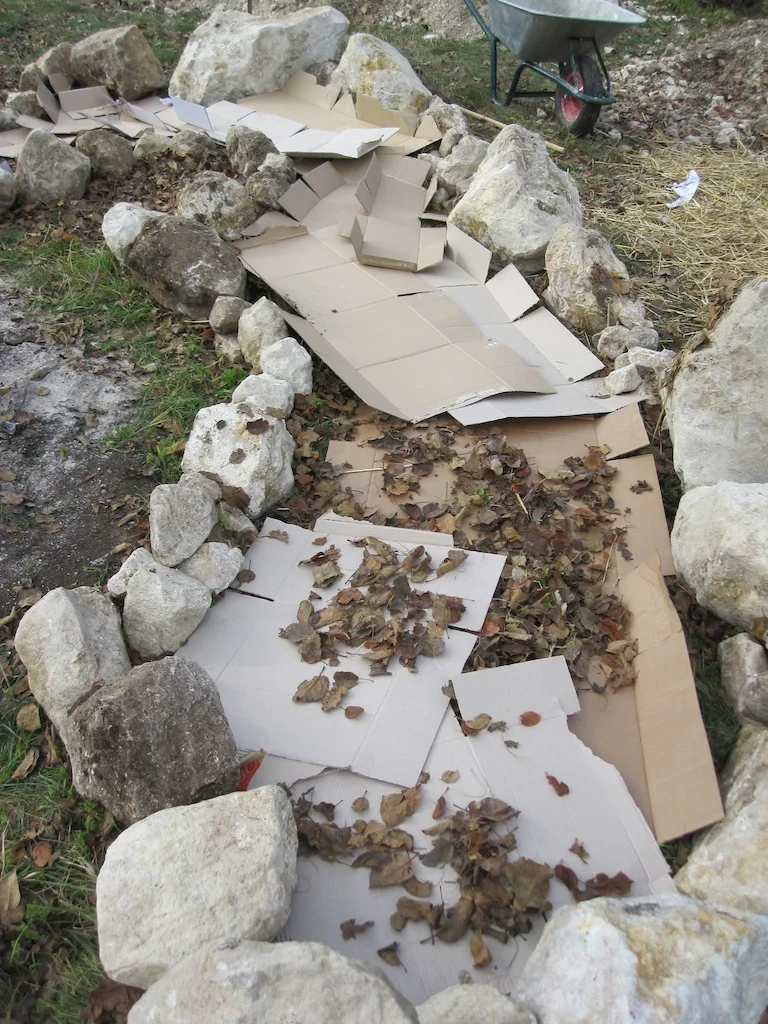
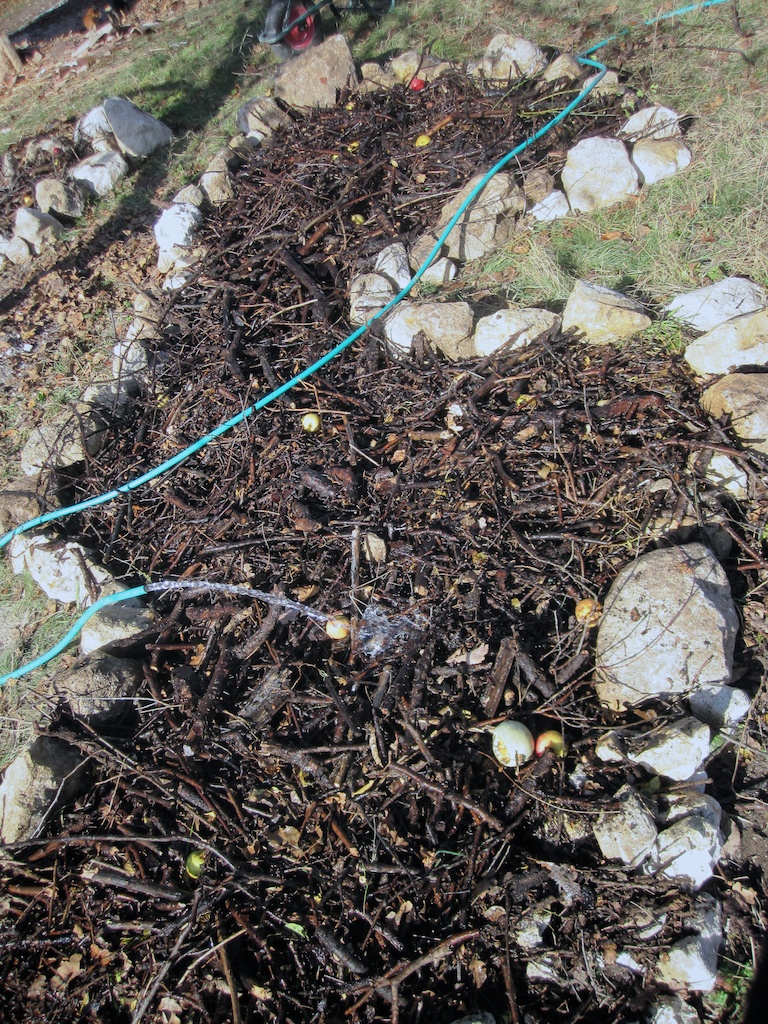
The bed was mulched as follows (bottom to top):

  1. a layer of cardboard (reclaimed from local shops) to suppress the weeds under the bed,
  2. a thick pile of decomposing organic matters (pruned branches, food scraps, fallen fruits), mixed with some soil excavated for cellar drainage,
  3. a deep layer of fallen leaves collected from surrounding roads and alleys,
  4. a layer of straw from locally produced bales to insulate the soil and prevent seed germination until spring.

The raised bed was then copiously watered and will be left over winter to decompose into rich humus. Now waiting for the spring to start planting...

Stranded: extreme picknicking in the dunes

Tom Hughes

In response to the Structures on the Edge competition, we collaborated with artist Tristan Hessing, of One Thoresby Street, to explore the ambivalent relationship between art and nature conservation. We designed a shifting public art installation on the wild beaches of the Lincolnshire coast, on the theme of extreme picnicking.

The Stranded art installation, slowly eroding within the shifting sand dunes of the Lincolnshire coast

Our chosen site: a fragile dune ecosystem, isolated on a windblown seashore.

Stranded was our shortlisted entry for the 2010 Structures on the Edge art programme, and a distant cousin of our Bathing Beauties competition entry.

The artists’ brief called for small permanent structures in the sand dunes of the Lincolnshire coast that would respond to the wild beauty and harsh environment. Our response was to design an installation for extreme picnicking as a robust response to the rugged nature of the site.

Shifting sands

We decided to make our intervention at a dune crossing point, reinforcing and protecting the dune whilst giving views and shelter for visitors as they move between land and beach. Stranded would be a faceted concrete structure whose shape was derived from the dune surface, but with points raised to provide views and shelter, and others buried beneath the surface to provide foundations. We would see it as a geometric abstraction of the dune landscape, a frozen snapshot of the shifting sands. It might be taken for an archaeological artefact that has been exposed, or is in the process of being covered, by the sands.

Our collaboration with the artist

We found that Tristan shared our approach to understanding the project and our chosen site at Wolla Bank. We took our cameras and tape recorders and had a picnic in the dunes. We talked and sketched and thought, but we also interviewed everyone we could — hikers, families, fishermen, dog walkers, bird watchers.

It became obvious that it was the remoteness and rawness that they appreciated. All of them had visited Wolla Bank many times, and they all praised its quietness and undeveloped nature. Rather than change the place by inserting an icon that would signal development, we decided we should intervene in a strong but subtle way in the landscape.

The making

The process of making Stranded would be intimately connected to these intentions. Creating a mould from the sand of the dune, we would dig out areas of the structure which would be ultimately submerged beneath the ground, and build up areas that would be raised. Finally, we would spray on fibre reinforced concrete to form the structure. The process would be like building a giant sand castle — a hands-on process through which we would engage the local community and visitors.

The exposed concrete areas would collect sand and be blown clean so that the structure would change over time, a process that we would document and that would help to explain the life, mobility and sensitivity of dunes to the visitor.

" 2hD have been committed to delivering the highest standard possible at every opportunity in our collaboration, which is absolutely how it should be and the reason why it has worked so well for all parties.
From our initial shared exploration of the site, they were very engaged with my responses and ideas, responding quickly with visualisations and practical suggestions for the making process. The principle of our collaboration was to understand where our common ground was and how best to pool resources and create design without compromise."

— Tristan Hessing, collaborating artist